
Introduction
Finishing university with a third-class degree in Nigeria can feel like the end of the road. Employers reject applications before even reading them, scholarship boards overlook you, and family expectations add more pressure. The stigma is real, and the frustration is heavy.
But here’s the good news: your degree classification is not a death sentence. With the right CV and cover letter, you can flip the narrative. These documents can help you prove to employers that you’re more than a number on a transcript—you are a skilled, resilient, and determined professional.
This guide will walk you through practical steps to craft a CV and cover letter that gets noticed—even as a third-class graduate in Nigeria.
Why CVs and Cover Letters Matter More Than Grades
In Nigeria, where thousands of graduates flood the job market every year, it’s easy to feel like your degree classification defines your destiny. If you graduated with a third-class degree, you probably already know the sting of seeing “minimum of Second Class Upper” on job adverts.
But here’s the truth: employers don’t hire GPAs—they hire people. And the first chance you have to show you’re more than your grade is through a well-written CV and cover letter.
1. First Impressions Come Before Degree Class
Recruiters don’t meet you first—they meet your documents. Research shows that most recruiters spend just 7–10 seconds scanning a CV before deciding whether to shortlist a candidate.
This means:
- If your CV is messy or generic, they won’t bother checking your education section.
- If your CV is sharp, achievement-driven, and well-structured, they’ll take notice—even if your degree class isn’t perfect.
Your CV can be the first filter that gets you inside the room.
2. Employers Value Skills Over Classifications
A third-class degree may close some doors, but skills reopen them. Companies in Nigeria today want problem-solvers, digital-savvy employees, and adaptable minds.
- CVs highlight your skills (technical and soft).
- Cover letters prove how those skills match the employer’s needs.
For example, a graduate with a third-class in Economics but strong skills in data analysis and Excel modeling can still be more valuable to a bank than someone with a first-class but no practical knowledge.
👉 Your CV and cover letter make it clear that you bring skills that matter right now.
3. Cover Letters Humanize Your Story
Your degree class is a number. Your cover letter is your voice. It’s where you explain that while your academic journey was tough, you’ve gained resilience, experience, and growth that make you stronger.
For instance:
- Instead of being defined by your “3rd class,” you can show how you managed side hustles, supported your family, or volunteered while in school.
- Employers begin to see the person behind the paper, not just the grade.
A compelling cover letter makes recruiters think:
“This candidate may not have the best grade, but they have the drive we need.”
4. Many Employers Don’t Even Filter by GPA
Contrary to what graduates think, not all Nigerian companies are obsessed with GPA. Startups, SMEs, NGOs, and international firms often care more about what you can do than what you scored in university.
- A polished CV gets you considered.
- A tailored cover letter shows your fit.
- A strong portfolio (linked in your CV) proves your value.
Together, these often outweigh your academic record—especially if the job doesn’t require technical licensing.
5. CVs and Cover Letters Highlight Continuous Growth
Your degree is frozen in time—it can’t change. But your CV and cover letter show that you’re still growing.
- Adding certifications (Google, Microsoft, PMP, etc.) demonstrates learning.
- Showing internships or volunteer projects proves adaptability.
- Writing a cover letter that connects your past struggles to your present skills shows maturity.
Employers love candidates who demonstrate progress despite setbacks.
6. They Show Your Ability to Communicate Professionally
Your degree may suggest you struggled academically, but a strong CV and cover letter can erase that doubt instantly.
Why? Because they show:
- You can organize information clearly (a skill every job requires).
- You can write professionally (communication is a top 3 skill in any industry).
- You can present yourself confidently (a trait employers admire).
When recruiters read your application, they’re already testing how you’d write reports, emails, or presentations on the job.
7. They Position You as an Achiever, Not a Victim
Without a strong CV and cover letter, your degree class dominates your identity. But with them, you shift the spotlight:
- Instead of: “Third-class graduate in Political Science.”
- Recruiters see: “Graduate who led a community project, trained 50 youths in ICT skills, and earned a certification in Project Management.”
One narrative keeps you stuck. The other positions you as a problem-solver and leader.
8. They Level the Playing Field
Think of CVs and cover letters as your chance to rewrite your story. A first-class graduate and a third-class graduate both submit documents. The employer won’t know the difference until they look at the Education section.
But by then, if your CV is strong, they’re already impressed by:
- Your skills
- Your achievements
- Your certifications
- Your professional tone
In that moment, you’re not the “third-class graduate”—you’re simply a promising candidate.
Quick Comparison: GPA vs. CV + Cover Letter Impact
| Factor | GPA / Degree Class | CV & Cover Letter Value |
|---|---|---|
| Fixed or flexible? | Fixed (cannot be changed) | Flexible (can be improved anytime) |
| Tells your story? | No | Yes (skills, achievements, growth) |
| First impression? | Rarely | Always (recruiter sees this first) |
| Employer focus | Narrow (academic performance) | Broad (skills, potential, experience) |
| Career impact | Early-stage only | Lifelong (used across industries/jobs) |
Final Thought on Why CVs and Cover Letters Matter
Your third-class degree is just one line on paper. But your CV and cover letter are entire narratives about who you are, what you’ve achieved, and why you’re worth hiring.
In a competitive Nigerian job market, employers care less about labels and more about value. If you can use your CV and cover letter to communicate that value—confidently and clearly—your grade won’t be the deciding factor in your career.
👉 Think of it this way: your GPA introduces you, but your CV and cover letter decide if you’re remembered.
Writing a Powerful CV as a Third-Class Graduate
Your CV should emphasize what you bring to the table—not what you lack.
1. Use a Clean and Modern Structure
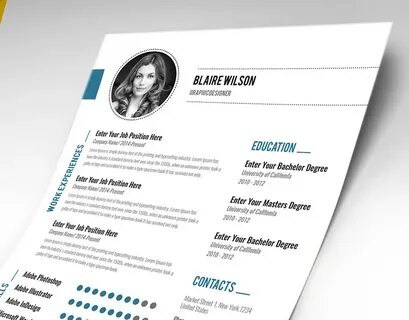
Avoid clutter. Your CV should be simple, neat, and easy to scan. Use this structure:
- Contact Details: Name, phone, professional email, LinkedIn link.
- Personal Profile: A short summary showcasing your strengths.
- Skills: A bullet-point list of both technical and soft skills.
- Work Experience: Highlight roles, projects, and achievements.
- Education: Include your degree, but don’t spotlight the classification.
- Certifications & Training: Show evidence of continuous growth.
- Achievements: Add measurable results to prove your impact.
2. Rewrite Your Personal Profile to Sell Yourself
Instead of:
“I graduated with a third-class in Business Administration.”
Try:
“Business Administration graduate with strong experience in sales, digital marketing, and project management. Passionate about helping businesses grow through data-driven strategies and innovative solutions.”
This tells the recruiter who you are now—not who you were at graduation.
3. Showcase Transferable Skills
Employers don’t just hire grades—they hire skills. Include both:
- Hard skills: Microsoft Excel, Data Analysis, Accounting, Coding, Project Management.
- Soft skills: Leadership, Communication, Teamwork, Problem-solving, Creativity.
4. Present Work Experience Creatively
Even if you don’t have corporate experience, you can highlight:
- Internships: Paid or unpaid.
- Volunteering: NGOs, church programs, or community service.
- Freelancing: Online gigs that show initiative.
- Entrepreneurship: Running a business counts as leadership experience.
Frame them as achievements:
“Managed a team of 3 volunteers to organize a youth empowerment seminar attended by 200 participants.”
5. Boost Your CV With Certifications
Certifications prove that you’re actively improving yourself despite your degree class.
Examples:
- Google Digital Marketing Certificate
- Microsoft Office Specialist (Excel, Word, PowerPoint)
- Project Management Professional (PMP)
- Data Analysis (Coursera/LinkedIn Learning)
These show recruiters that you are future-ready.
Writing a Cover Letter That Wins Recruiters Over
Your cover letter is your chance to tell your story and neutralize the effect of your GPA.
1. Structure of a Strong Cover Letter
- Introduction: Express enthusiasm and state the role you’re applying for.
- Body (2–3 paragraphs):
- Highlight relevant skills and achievements.
- Explain briefly (without excuses) how your GPA doesn’t reflect your true potential.
- Showcase certifications, projects, or leadership experience.
- Closing: Express gratitude, confidence, and invite further discussion.
2. Example Cover Letter Snippet
Weak:
“I graduated with a third-class degree but I am hardworking and willing to learn.”
Strong:
“As a Computer Science graduate with experience in web design and IT support, I have built platforms that improved efficiency for small businesses. My certifications in Full-Stack Development and my ability to manage client projects successfully demonstrate my capacity to deliver value beyond my academic grade.”
Notice the difference: confidence beats apology.
Key Differences Between CVs and Cover Letters
| Feature | CV | Cover Letter |
|---|---|---|
| Purpose | Professional snapshot | Personal story & career motivation |
| Length | 1–2 pages | 1 page (3–4 paragraphs) |
| Tone | Formal & factual | Conversational yet professional |
| Focus | Achievements & qualifications | Why you fit the specific role |
| Audience | Recruitment software & HR filters | Human hiring managers |
Strategies to Stand Out as a Third-Class Graduate
- Tailor your CV & cover letter for each job—don’t use one generic version.
- Use powerful action verbs: Led, Designed, Managed, Improved, Created.
- Quantify results: “Increased sales by 30%” is stronger than “Worked in sales.”
- Leverage LinkedIn: Keep your profile active and connect with recruiters.
- Network: Sometimes connections matter more than CVs.
Mistakes to Avoid
- Over-explaining your third-class degree.
- Using unprofessional email addresses.
- Submitting the same CV to every job.
- Filling your CV with buzzwords without proof.
- Writing a cover letter that repeats your CV word for word.
FAQs
Q1: Should I mention my third-class degree on my CV?
Yes, but don’t dwell on it. Keep it under “Education” and move on.
Q2: How do I explain my third-class in my cover letter?
Address it briefly, then redirect attention to your skills and growth.
Q3: Can certifications really make up for a low GPA?
Yes. Employers value practical knowledge and proof of continuous learning.
Q4: What if I have no work experience?
Leverage volunteering, projects, and freelancing. They all count.
Q5: Should I use templates?
Yes, but keep them professional and easy to read on mobile.
Conclusion
A third-class degree does not define your future. What matters most is how you package your story. With a well-crafted CV and a persuasive cover letter, you can show employers that you’re more than your academic record—you’re a driven professional with skills, resilience, and ambition.
Remember this: employers hire value, not grades. If you prove your worth, your CV and cover letter will open doors you never thought possible.
👉 When explaining why tailoring a cover letter increases your chances, you can write:
According to Indeed’s guide on writing cover letters, customizing your letter for each job application significantly improves your chances of landing interviews.
This way, the link is contextual, credible, and helpful to readers—and it boosts your SEO authority.
👉 Start today—rewrite your CV, craft a powerful cover letter, and let your future employers see the professional you’ve become, not the student you once were.
Leave a Reply