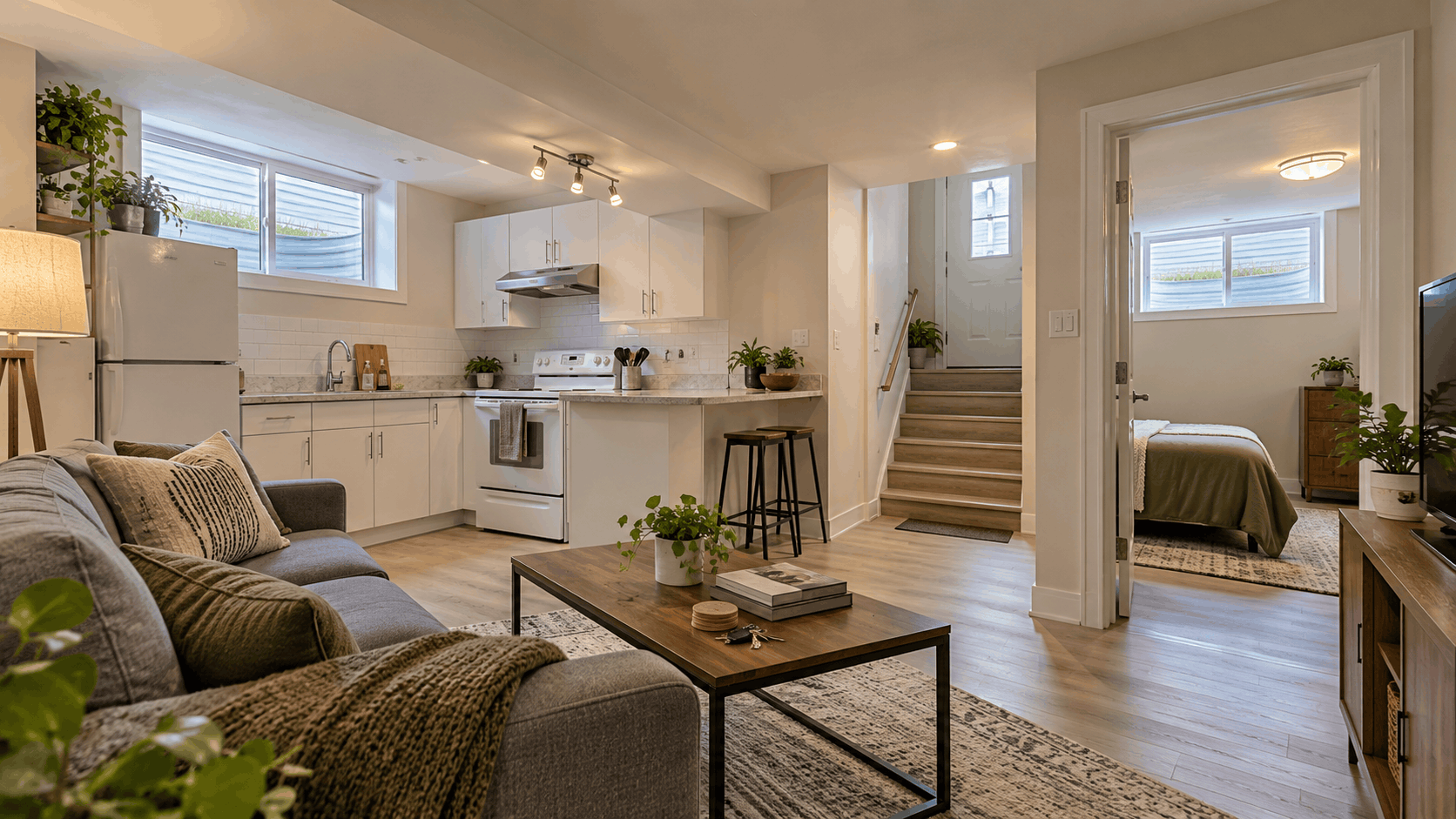
Finding an affordable place to live in Calgary can be challenging, especially if you are a new immigrant, international student, foreign worker, or someone trying to reduce monthly housing expenses. While renting a full apartment may be expensive, rooms and basement apartments can offer more affordable accommodation options.
Many people searching for rooms and basement apartments for rent in Calgary want a comfortable place with reasonable rent, access to public transportation, and basic facilities. A private room may be suitable for someone who does not mind sharing a kitchen or bathroom, while a basement apartment can provide more privacy and independence.
However, rental prices are not the same across Calgary. The amount you pay depends on the neighbourhood, property size, available facilities, and whether utilities are included. Some landlords also require proof of income, identification, references, or a credit check before approving a rental application.
If you are moving to Calgary for the first time, understanding these requirements can make your accommodation search easier and help you avoid unnecessary expenses.
In this guide, you will learn about room rental prices in Calgary in 2026, basement apartment costs, affordable neighbourhoods, rental requirements, and the best websites to find available accommodation. You will also discover how to rent without Canadian credit history, identify suitable basement suites, avoid rental scams, and understand important tenant rights in Alberta.
Whether you need a furnished room, a shared apartment, or a private basement suite, this guide will help you understand your options and make a better housing decision.
Understanding Rooms and Basement Apartments in Calgary
Before searching for accommodation in Calgary, it is important to understand the different types of rooms and basement apartments available. Although both options can be more affordable than renting a regular apartment, they offer different levels of privacy, space, and convenience.
Some properties are rented to one person, while others are shared by several tenants. Knowing the difference will help you choose accommodation that matches your budget and lifestyle.
What Is a Room Rental in Calgary?
A room rental means paying to occupy a bedroom inside a house, apartment, townhouse, or other residential property.
In most cases, you have your own bedroom but share certain facilities with other people living in the building.
These shared facilities may include:
- Kitchen and cooking equipment.
- Bathroom and toilet.
- Living room.
- Laundry facilities.
- Parking space.
- Internet connection.
For example, a homeowner may rent out three bedrooms in a house to different tenants. Each person pays for their bedroom while sharing the kitchen and other common areas.
Room rentals are popular among international students, single workers, and newcomers who want to reduce their accommodation expenses.
Types of Rooms Available for Rent in Calgary
There are several room rental options in Calgary.
1. Private Rooms
A private room gives you a bedroom for your personal use. You may still share the bathroom, kitchen, and living room with other tenants.
2. Shared Rooms
A shared room means two or more people occupy the same bedroom. This arrangement may cost less per person, but it provides limited privacy.
3. Furnished Rooms
Furnished rooms usually come with basic furniture such as a bed, mattress, wardrobe, and desk. The furniture included depends on the property.
4. Unfurnished Rooms
An unfurnished room generally does not include bedroom furniture. You may need to purchase your own bed, mattress, and other household items.
5. Rooms with Private Bathrooms
Some rooms have an attached bathroom for the tenant’s personal use. These rooms may cost more than those with shared bathrooms.
What Is a Basement Apartment in Calgary?
A basement apartment is a living space located on the lower level of a residential building.
Many houses in Calgary have basements that are used as separate rental accommodation.
A self-contained basement apartment may include:
- One or more bedrooms.
- A private bathroom.
- A kitchen.
- A living room.
- Storage space.
- Laundry facilities.
- A separate entrance.
Unlike a typical room rental, a self-contained basement apartment allows tenants to use their own kitchen and bathroom without sharing them with people living upstairs.
However, not every basement rental is a complete apartment. Some landlords rent individual bedrooms inside a basement, with tenants sharing the kitchen and bathroom.
Always confirm whether the advertised property is an entire basement suite or just a room inside a basement.
Types of Basement Apartments Available in Calgary
1. One-Bedroom Basement Apartments
These usually have one bedroom, a bathroom, a kitchen, and a living area. They may suit single renters or couples.
2. Two-Bedroom Basement Apartments
A two-bedroom basement suite provides additional space and may be suitable for couples, small families, or two people sharing rent.
3. Three-Bedroom Basement Apartments
These offer more bedrooms and may suit larger households, depending on the property’s permitted occupancy and layout.
4. Walkout Basement Apartments
A walkout basement has an entrance that opens directly to the outside at ground level. Depending on the property design, it may also offer larger windows and more natural light.
5. Furnished Basement Apartments
These come with some furniture and household items, making them convenient for newcomers who do not want to purchase everything immediately.
6. Unfurnished Basement Apartments
These provide living space without most furniture. They may be suitable for tenants who already own household items or plan to stay for a longer period.
Who Should Rent a Room or Basement Apartment in Calgary?
The best option depends on your household size, income, and need for privacy.
| Type of renter | Accommodation worth considering |
|---|---|
| International student | Private room or shared accommodation |
| Single foreign worker | Furnished room or one-bedroom basement |
| Newly arrived immigrant | Furnished room or basement apartment |
| Married couple | One-bedroom basement apartment |
| Small family | Two-bedroom basement apartment |
| Friends sharing expenses | Multiple-bedroom basement apartment |
| Person on a limited budget | Private room with shared facilities |
| Person who values privacy | Self-contained basement apartment |
These are general suggestions. The right choice still depends on the actual rent, property conditions, and rental agreement.
Before choosing either option, consider how many people will live in the property, which facilities you will share, and whether the location is convenient for work or school.
A cheaper room may help you save money, but a basement apartment could be worth the additional cost if you need more personal space.
Average Room Rental Prices in Calgary in 2026
The cost of renting a room in Calgary depends on the location, room size, furniture, and facilities available. While some rooms are relatively cheap, others cost more because they offer private bathrooms, larger spaces, or convenient access to downtown Calgary.
In 2026, renters can find private rooms advertised for around $600 to $1,000 per month, although some rooms cost less and premium accommodation can exceed this range.
Calgary’s average advertised rent for shared accommodation was approximately $810 per month in September 2026, representing a 4.7% decrease compared with September 2025.
This means someone planning to rent a room in Calgary should consider a monthly budget of about $700 to $900 for a typical private room, depending on the property and what is included.
Calgary Room Rental Price Comparison in 2026
The table below provides approximate monthly budgeting ranges for different types of rooms in Calgary.
| Room type | Estimated monthly rent (CAD) |
|---|---|
| Shared bedroom | $500–$800 |
| Basic private room | $600–$850 |
| Furnished private room | $650–$950 |
| Unfurnished private room | $600–$850 |
| Large private bedroom | $800–$1,100 |
| Room with private bathroom | $900–$1,250 |
| Private room near major transit or campuses | $700–$1,100 |
| Premium furnished room | $1,000–$1,300+ |
These figures are approximate search and budgeting ranges based on rental-market information and advertised listings in 2026. They are not fixed market averages for each room category. Actual prices and availability change regularly.
How Much Does a Private Room Cost in Calgary?
A private room is one of the most common accommodation choices for people who want to live independently without paying for an entire apartment.
For example, you may find a private bedroom advertised for $700 monthly in a shared house. The room might include a bed, wardrobe, and access to a shared bathroom and kitchen.
Another private room may cost $900 monthly because it is larger, closer to public transportation, or includes all utilities.
Before choosing a room, check whether the advertised rent covers electricity, heating, water, internet, and laundry.
A room advertised for $700 may not be cheaper than an $800 room if you must pay additional utility bills.
Furnished vs. Unfurnished Room Rental Prices
Furnished accommodation is convenient for newcomers arriving in Calgary without household items.
A furnished private room may include:
- Bed and mattress.
- Wardrobe or closet.
- Study table.
- Chair.
- Basic storage furniture.
Some landlords also provide bedding, although this should never be assumed.
Furnished rooms may cost more than similar unfurnished rooms, but the price difference is not always significant.
For example, an unfurnished room might cost $700 monthly, while a comparable furnished room is advertised for $800.
The additional $100 may be worthwhile for someone arriving from another country who does not want to purchase bedroom furniture immediately.
However, if you already have furniture and plan to stay for a long time, an unfurnished room may be worth considering.
Room Rental Prices in Different Parts of Calgary
Calgary is divided into four main geographical quadrants: Northeast, Northwest, Southeast, and Southwest.
Room rental prices can vary considerably within each area.
Northeast Calgary
Some neighbourhoods in Northeast Calgary have private rooms advertised at relatively affordable prices. Renters may find options in shared houses and townhouses, particularly when they are flexible about location and facilities.
Northwest Calgary
Northwest Calgary has room rental opportunities for students, workers, and other residents. Accommodation near the University of Calgary, SAIT, and convenient transit routes may attract more interest.
Southeast Calgary
Southeast Calgary offers room rentals in both established and newer residential communities. Prices depend on the neighbourhood, distance from workplaces, and available transportation.
Southwest Calgary
Southwest Calgary includes both premium residential areas and neighbourhoods with more modest room rental options. Renters should compare individual listings because prices differ significantly between communities.
A detailed neighbourhood comparison will help identify places worth searching when affordability is the main concern.
What Factors Affect Room Rental Prices in Calgary?
Several things determine how much a landlord charges for a room.
1. Location
Rooms close to downtown, major employment areas, universities, and convenient transportation may have higher asking rents.
2. Room Size
A large bedroom with additional storage space may cost more than a smaller bedroom.
3. Private Bathroom
Rooms with dedicated bathrooms can be more expensive because tenants do not have to share those facilities.
4. Furniture
A fully furnished room may have a higher rental price, especially if it includes quality furniture and additional facilities.
5. Utilities
Some landlords include heat, electricity, water, and internet in the monthly rent. Others charge separately.
6. Number of Housemates
A property with several tenants sharing facilities may offer lower room prices. However, the number of occupants can affect comfort and privacy.
How Much Should You Budget for a Room in Calgary?
If you are moving to Calgary alone, setting aside approximately $800 to $1,000 monthly for room rent and possible utility expenses can give you a useful starting budget.
For example:
| Monthly expense | Example cost (CAD) |
|---|---|
| Private room rent | $750 |
| Utilities, if charged separately | $60 |
| Internet contribution | $25 |
| Total monthly accommodation cost | $835 |
This is an illustrative budget, not a citywide average. Actual bills depend on the rental arrangement.
Remember that rent is only one part of your housing expenses. You may also need money for transportation, groceries, personal items, and upfront moving costs.
When comparing rooms, focus on the total monthly cost and whether the accommodation meets your needs. A slightly more expensive room with included utilities and convenient transportation can sometimes provide better value than a cheaper room with additional expenses.
Basement Apartment Rental Prices in Calgary in 2026
Basement apartments are another accommodation option for people looking for affordable housing in Calgary. They are particularly suitable for couples, small families, and individuals who prefer having their own kitchen, bathroom, and living space.
In 2026, the monthly rent for a self-contained basement apartment in Calgary commonly falls between $1,000 and $1,700, although larger, newer, or more expensive properties can cost more.
Recent rental listings show that one-bedroom basement suites are sometimes available for around $1,050 to $1,200 monthly, while many two-bedroom basement apartments are advertised for approximately $1,300 to $1,600.
However, the advertised rental price does not always include utilities. Some landlords charge tenants separately for electricity, heating, water, and internet.
Average Basement Apartment Rental Prices in Calgary
The table below provides approximate monthly rental ranges for different basement apartment types in Calgary in 2026.
| Basement apartment type | Estimated monthly rent (CAD) |
|---|---|
| Studio-style basement suite | $950–$1,350 |
| One-bedroom basement apartment | $1,000–$1,450 |
| Two-bedroom basement apartment | $1,200–$1,700 |
| Three-bedroom basement apartment | $1,400–$1,900 |
| Furnished one-bedroom basement | $1,100–$1,600 |
| Furnished two-bedroom basement | $1,400–$1,900 |
| Walkout basement apartment | $1,300–$1,900 |
| Larger or premium basement suite | $1,700–$2,200+ |
These are approximate budgeting ranges based on 2026 market information and rental advertisements, not official average rents for each category. Some properties may be available below or above these amounts.
One-Bedroom Basement Apartment Prices in Calgary
One-bedroom basement apartments are suitable for single people and couples who want more privacy than a room rental provides.
A typical self-contained one-bedroom basement suite may include:
- One private bedroom.
- A bathroom.
- A kitchen.
- A living area.
- A separate entrance.
- Access to laundry facilities.
Some properties also include parking and additional storage space.
For example, a one-bedroom basement suite may be advertised for $1,200 monthly, with tenants responsible for a portion of the household’s utility expenses.
Another property may cost $1,300 but include heating, electricity, water, and internet.
If you are choosing between two properties, compare the total monthly expenses rather than looking at rent alone.
Two-Bedroom Basement Apartment Prices in Calgary
Two-bedroom basement apartments are popular among couples who need an extra room, small families, and renters who want to share accommodation costs.
Many two-bedroom basement listings in Calgary fall around $1,300 to $1,600 monthly, although prices depend on the property.
For example, two friends renting a basement apartment for $1,400 monthly could each contribute $700 towards the rent if they agree to split it equally.
This arrangement may be more affordable per person than renting separate accommodation.
However, both tenants should understand their responsibilities under the rental agreement, including who is responsible for paying rent if one person moves out.
Three-Bedroom Basement Apartment Prices in Calgary
Three-bedroom basement apartments provide additional space for households that need more than one or two bedrooms.
Some older or smaller three-bedroom basement suites may have lower advertised rents, while renovated properties with larger rooms and additional bathrooms may cost significantly more.
Before renting a three-bedroom basement, consider:
- The size of each bedroom.
- Number of bathrooms.
- Available storage.
- Laundry facilities.
- Kitchen space.
- Natural lighting.
- Number of people permitted to occupy the property.
Having three bedrooms does not automatically mean the basement is suitable for a large number of tenants. The property must meet applicable safety and occupancy requirements.
Furnished vs. Unfurnished Basement Apartment Prices
Furnished basement apartments may be convenient for people arriving in Calgary without furniture.
Depending on the property, a furnished basement suite may provide beds, sofas, tables, chairs, and basic kitchen equipment.
Unfurnished basement apartments generally require tenants to provide their own furniture.
Although furnished accommodation can have a higher monthly rental price, this is not always the case. Location, size, condition, and included utilities can make a bigger difference.
If you only need accommodation for a few months, renting a furnished basement might help you avoid buying furniture.
For a longer stay, an unfurnished apartment may be worth considering.
Additional Expenses When Renting a Basement Apartment
The advertised monthly rent is not always the total amount you will pay.
Some basement landlords include utility bills in the rent. Others require tenants to pay a fixed amount or an agreed percentage of the property’s utility costs.
For example, a landlord may request that basement tenants pay 30% or 40% of the household’s monthly utility bills.
Before agreeing, ask how the percentage is calculated and whether you can see previous bills to estimate the cost.
The following table shows an example monthly basement apartment budget.
| Expense | Example monthly cost (CAD) |
|---|---|
| Two-bedroom basement rent | $1,400 |
| Heating, electricity, and water contribution | $150 |
| Internet | $60 |
| Total monthly accommodation cost | $1,610 |
This is an example, not a guaranteed monthly bill. Utility expenses can change with the weather, household usage, and rental arrangement.
Other possible expenses include parking, tenant insurance, and laundry charges.
Factors That Affect Basement Apartment Rental Prices
The following factors can explain why two basement apartments with the same number of bedrooms have different prices.
Location: Properties close to employment areas, shopping centres, schools, and convenient transportation may have higher rents.
Property condition: Recently renovated basement suites may cost more than older properties with basic finishes.
Separate entrance: A private entrance can make a basement more convenient and attractive to renters.
Natural lighting: Walkout basements and suites with larger windows may be more desirable.
Laundry facilities: Having a private washer and dryer may increase the value of a rental.
Utilities: A property that includes major utility expenses may have a higher advertised rent but lower additional monthly costs.
Furniture: Fully furnished suites may attract renters who want accommodation without purchasing household items.
Are Basement Apartments Cheaper Than Regular Apartments in Calgary?
Basement apartments can be cheaper than regular apartments with similar bedroom counts, but this is not always guaranteed.
A basement suite may offer a lower monthly rent because it is located beneath a house rather than inside a purpose-built apartment building.
However, some newly built basement suites cost almost as much as smaller apartments.
When comparing accommodation, check the property size, location, access to natural light, privacy, utilities, and overall condition.
A lower price is useful, but the property must also be safe and comfortable.
For newcomers trying to reduce housing costs, a well-maintained basement apartment can provide a reasonable balance between affordability and personal space.
Renting a Room vs. Renting a Basement Apartment in Calgary
Choosing between a room and a basement apartment in Calgary depends on your budget, household size, and how much privacy you need.
A room rental generally costs less because you are paying for a bedroom and sharing other parts of the property. A self-contained basement apartment usually costs more because you have your own living space, kitchen, and bathroom.
However, renting a basement with another person can sometimes reduce your individual housing expenses.
Room Rental vs. Basement Apartment: Cost and Features Comparison
| Features | Room rental | Basement apartment |
|---|---|---|
| Typical monthly rent | $600–$1,000 | $1,000–$1,700 |
| Privacy | Limited to your bedroom | More privacy |
| Kitchen | Usually shared | Usually private |
| Bathroom | Often shared | Usually private |
| Living room | May be shared | Usually private |
| Utilities | May be included | May be charged separately |
| Furniture | Furnished options available | Furnished options available |
| Suitable for | Students and single renters | Couples, families, and individuals |
| Personal space | Generally smaller | Generally larger |
| Sharing expenses | Depends on arrangement | Possible with other occupants |
These are broad comparisons. Individual properties may have different arrangements, and larger basement suites can cost considerably more.
Advantages of Renting a Room in Calgary
A private room can be a practical choice for someone who wants to keep housing expenses low.
Some benefits include:
1. Lower Monthly Rent
Rooms generally cost less than renting an entire apartment. This can help newcomers manage expenses while settling into Calgary.
2. Lower Furnishing Expenses
Many room rentals already include basic furniture, reducing the amount you need to spend when moving in.
3. Opportunity to Share Household Expenses
When utilities are not included in the rent, housemates may share the costs of internet, electricity, and other household services.
4. Suitable for Shorter Stays
Some room rentals offer flexible arrangements, making them useful for people who need temporary accommodation. Always confirm the rental term before signing.
Disadvantages of Renting a Room
Room rentals also have limitations.
You may need to share the bathroom, kitchen, and laundry facilities with several people.
Housemates may have different sleeping schedules, cleaning habits, or lifestyles, which can affect your comfort.
There may also be restrictions on overnight guests, shared storage, or using common areas.
If you enjoy having your own space, these arrangements may become uncomfortable over time.
Advantages of Renting a Basement Apartment in Calgary
A self-contained basement apartment offers greater independence.
1. More Privacy
You can usually use your own kitchen, bathroom, and living room without sharing them with people upstairs.
2. Suitable for Couples and Small Families
A one-bedroom or two-bedroom basement suite may provide enough space for a couple or a small household, depending on its layout.
3. Greater Control Over Your Living Space
You can generally organise your daily activities without coordinating kitchen or bathroom use with unrelated housemates.
4. Opportunity to Split Rent
Two people sharing a suitable two-bedroom basement may pay less per person than they would for separate accommodation.
Disadvantages of Renting a Basement Apartment
Basement apartments can have some drawbacks.
First, the rent is usually higher than the cost of a single room.
Some basements also receive less natural light, particularly when they have small windows.
Noise from people living upstairs may be noticeable, depending on the building’s construction.
Additionally, certain properties have shared laundry facilities, limited parking, or separate utility charges.
Before renting, inspect the property and confirm exactly which spaces and services are included.
Which Is Cheaper: Renting a Room or Sharing a Basement Apartment?
Consider the following example:
| Accommodation arrangement | Total monthly rent | Rent per person |
|---|---|---|
| One person renting a private room | $750 | $750 |
| One person renting a one-bedroom basement | $1,200 | $1,200 |
| Two people sharing a two-bedroom basement | $1,400 | $700 |
| Three people sharing a suitable three-bedroom basement | $1,800 | $600 |
These examples exclude utilities and other expenses.
Sharing a basement may reduce the amount each person contributes towards rent. However, tenants must agree on how expenses will be divided and understand their responsibilities under the lease.
Which Accommodation Option Should You Choose?
Choose a private room if:
- You are moving to Calgary alone.
- Your accommodation budget is limited.
- You are comfortable sharing facilities.
- You need a furnished place without buying household items.
- You are looking for temporary accommodation while settling into the city.
Consider a basement apartment if:
- You want more privacy.
- You are moving with your partner or family.
- You prefer your own kitchen and bathroom.
- You need additional living or storage space.
- You plan to share accommodation with someone you know.
The best choice is not necessarily the cheapest property.
Consider your daily routine, transportation needs, household size, and total housing expenses before deciding.
A comfortable home that fits your budget can make settling into Calgary much easier.
Cheapest Areas to Find Rooms and Basement Apartments in Calgary
Finding cheap rooms and basement apartments in Calgary becomes easier when you know which neighbourhoods to search.
Some communities have older houses, shared accommodation, and basement suites that may cost less than newer apartments in expensive residential areas.
However, the cheapest neighbourhood is not always the best choice. Transportation, distance to work, nearby shops, and property conditions are also important.
Below are some Calgary neighbourhoods worth considering if you are searching for affordable accommodation in 2026.
Affordable Areas in Northeast Calgary
Northeast Calgary is a useful starting point for people looking for lower-cost rooms and basement suites.
Several established neighbourhoods have houses with private bedrooms and separate basement accommodation.
1. Marlborough
Marlborough is worth checking for budget-friendly rental accommodation.
The neighbourhood has established residential properties, shopping facilities, and access to Calgary’s Blue Line CTrain.
Renters can search for:
- Private rooms inside shared houses.
- Furnished bedrooms.
- One-bedroom basement suites.
- Two-bedroom basement apartments.
Marlborough may suit people who want to live outside downtown while maintaining access to public transportation.
2. Rundle
Rundle is another neighbourhood to consider when searching for affordable rooms.
Recent rental listings have included private rooms advertised around $650 to $700 monthly, although available prices change.
Some basement apartments have also been advertised for approximately $1,050 to $1,300.
Rundle has a CTrain station on the Blue Line, making it worth considering for people who depend on public transportation.
3. Pineridge
Pineridge has residential houses and shared accommodation options that may suit budget-conscious renters.
You can search for furnished bedrooms, unfurnished rooms, and basement suites.
When viewing properties in Pineridge, check the distance to the nearest bus stop and the connections available to CTrain stations.
Affordable Areas in Southeast Calgary
Southeast Calgary has several established communities where renters can search for lower-cost accommodation.
4. Forest Lawn
Forest Lawn is one of the areas worth exploring when affordability is a priority.
Rental advertisements in 2026 have included one-bedroom basement suites around $925 to $1,100 monthly, although these examples do not represent every available property.
Forest Lawn also has shops, restaurants, grocery stores, and bus connections.
It may suit renters who want access to daily essentials without living in downtown Calgary.
5. Ogden
Ogden is another established Southeast Calgary neighbourhood with basement rental opportunities.
Recent advertisements have included basement suites costing approximately $1,050 to $1,490 monthly.
The community has residential streets, local shopping facilities, and bus services.
If you work in Southeast Calgary, Ogden may be worth checking because its location could reduce your commuting distance.
Always calculate the actual travel time to your workplace before choosing a rental.
Affordable Areas in Northwest Calgary
Northwest Calgary has a mixture of older communities, newer neighbourhoods, and areas close to educational institutions.
Some locations are more expensive than others, so comparing individual listings is important.
6. Bowness
Bowness is a neighbourhood worth considering for both room rentals and basement apartments.
Recent listings have shown private rooms advertised between approximately $500 and $1,100 monthly, while basement rental advertisements have ranged from around $1,000 to $1,700.
These wide ranges reflect differences in room size, property condition, and available facilities.
Bowness also has local shops, parks, and bus connections.
However, it does not have its own CTrain station, so renters who depend on public transportation should check their route carefully.
Affordable Areas in Southwest Calgary
Although some Southwest Calgary neighbourhoods have expensive housing, there are also established communities with rooms and basement apartments at more modest prices.
7. Southwood
Southwood is worth exploring if you want a basement apartment in Southwest Calgary.
Some rental listings in 2026 have advertised one-bedroom basement suites for approximately $1,000 to $1,400.
Depending on the property’s location, renters may have access to the Southland or Anderson CTrain stations.
Southwood may suit people working or studying in southern Calgary who want to avoid a long commute.
8. Haysboro
Haysboro is another established neighbourhood where renters can look for shared accommodation and basement suites.
The area offers access to shopping and transportation, with parts of the neighbourhood located near Heritage and Southland CTrain stations.
Rental costs depend on the individual property, so compare several listings before deciding whether Haysboro fits your budget.
Calgary Neighbourhood Comparison for Budget Renters
The table below highlights the areas discussed and the accommodation options worth searching for.
| Neighbourhood | Calgary area | Accommodation to search for | Transportation consideration |
|---|---|---|---|
| Marlborough | Northeast | Rooms and basement suites | Blue Line CTrain access |
| Rundle | Northeast | Private rooms and basement suites | Rundle CTrain station |
| Pineridge | Northeast | Furnished rooms and basement suites | Check bus connections |
| Forest Lawn | Southeast | Affordable basement suites and rooms | Bus connections |
| Ogden | Southeast | One- and two-bedroom basement suites | Check bus routes |
| Bowness | Northwest | Private rooms and basement apartments | Bus connections; no local CTrain station |
| Southwood | Southwest | Basement apartments and private rooms | Southland and Anderson stations nearby |
| Haysboro | Southwest | Rooms and basement suites | Heritage and Southland stations nearby |
These neighbourhoods are places to begin searching, not a fixed ranking of Calgary’s cheapest communities.
Prices can vary significantly between properties in the same neighbourhood.
How to Choose the Best Affordable Neighbourhood in Calgary
Before renting a room or basement apartment, consider the following factors.
1. Distance to Work or School
A cheaper property may not save you much money if you have to spend more on transportation.
Try to find accommodation with a convenient route to your workplace, college, or university.
2. Public Transportation
If you do not own a car, check whether the property is close to a bus stop or CTrain station.
Use Calgary Transit’s journey planner to estimate your commute rather than relying only on the landlord’s description.
3. Grocery Stores and Essential Services
Living near grocery stores, pharmacies, and other essential services can make daily life easier.
4. Property Safety and Condition
Do not choose accommodation based only on the price.
Inspect the property, check the neighbourhood at different times if possible, and confirm that the rental meets relevant safety requirements.
5. Total Housing Expenses
A room costing $650 monthly may seem cheaper than one costing $800.
However, if the first property requires additional utility payments and expensive transportation, the difference may be smaller than expected.
Where Should Newcomers Start Searching?
If your main priority is affordable accommodation, consider starting with neighbourhoods such as Marlborough, Rundle, Pineridge, Forest Lawn, Ogden, and Bowness.
For people who want to live in Southwest Calgary, Southwood and Haysboro are also worth exploring.
Set your preferred monthly rental budget, compare available properties, and check transportation before contacting landlords.
Most importantly, remain flexible. Sometimes an affordable property in a neighbourhood you had not considered can be a better choice than a more expensive rental in your preferred location.
Best Websites and Platforms to Find Rooms for Rent in Calgary
Finding rooms for rent in Calgary is easier when you know where landlords and homeowners advertise available accommodation.
Many private rooms, furnished bedrooms, and shared houses are listed online. Some websites focus on residential rentals, while others allow homeowners and people looking for roommates to advertise directly.
If you are searching for cheap rooms for rent in Calgary, it is helpful to check several platforms instead of depending on only one website.
Below are some of the best places to begin your search in 2026.
RentFaster.ca
Website: www.rentfaster.ca
RentFaster.ca is a popular rental listing website in Alberta. It advertises different types of residential accommodation, including rooms, apartments, houses, and basement suites.
You can use the platform to search for available rooms in different Calgary neighbourhoods.
To find accommodation:
- Visit the RentFaster website.
- Enter Calgary as your preferred location.
- Look for the room rental property type.
- Set your preferred monthly rental budget.
- Review available listings.
- Contact the advertiser to arrange a viewing.
Read each property description carefully because some listings may advertise multiple rooms or different rental arrangements.
Check whether the price is for one bedroom or the entire property.
Roomies.ca
Website: www.roomies.ca
Roomies.ca is particularly useful for people searching for private rooms, shared accommodation, and potential roommates.
The platform allows renters to explore listings based on their accommodation preferences.
You can search for:
- Private bedrooms.
- Shared bedrooms.
- Furnished rooms.
- Unfurnished rooms.
- Rooms with private bathrooms.
- Accommodation suitable for students.
- Rooms in houses and apartments.
One advantage of Roomies.ca is that listings often explain whether the bathroom is shared, whether furniture is included, and what facilities tenants can use.
Some advertisements also provide information about the people already living in the property.
This can help you decide whether the accommodation arrangement suits your lifestyle before contacting the advertiser.
Kijiji Calgary
Website: www.kijiji.ca
Kijiji is another platform where people advertise rooms and shared accommodation in Calgary.
You can find advertisements posted by homeowners, landlords, and individuals searching for roommates.
Search terms such as the following may help:
- Private room for rent in Calgary.
- Cheap rooms for rent in Calgary NE.
- Furnished room for rent in Calgary.
- Basement room for rent in Calgary.
- Room for rent near Calgary CTrain.
- Shared accommodation in Calgary.
Kijiji listings may include photos, rental prices, locations, and details about household facilities.
However, advertisements are created by individual users, so renters should independently verify the information before making payments.
Be especially careful when an advertiser offers an unusually low price or pressures you to send money immediately.
Facebook Marketplace
Website: www.facebook.com/marketplace
Facebook Marketplace is another option for finding rooms and basement accommodation in Calgary.
Some homeowners advertise available bedrooms directly, while other people use the platform to search for roommates.
To begin:
- Open Facebook Marketplace.
- Set your search location to Calgary, Alberta.
- Look through available property rental listings.
- Search for private rooms or shared accommodation.
- Compare the advertised prices.
- Contact the advertiser through Facebook Messenger.
You can also search Facebook for Calgary rental groups.
Useful group search phrases include:
- Calgary rooms for rent.
- Calgary roommates.
- Calgary rental accommodation.
- Calgary housing for newcomers.
- Calgary student accommodation.
Group availability and activity can change, so check whether a group has recent listings before relying on it.
Facebook can be useful for contacting advertisers quickly, but a Facebook profile alone is not proof that someone owns a property or has permission to rent it.
Rentals.ca
Website: www.rentals.ca
Rentals.ca provides residential rental listings across Canada, including Calgary.
Although it is widely used for apartments and houses, renters can also explore room-related listings.
The platform can help you compare accommodation based on factors such as:
- Location.
- Monthly rent.
- Property type.
- Number of bedrooms.
- Furnishing.
- Available facilities.
Be sure to read the complete advertisement because some results may be for entire apartments rather than individual rooms.
Rentals.ca can also be useful if you want to compare the cost of renting a room with the cost of renting a small apartment.
Places4Students
Website: www.places4students.com
Places4Students is worth considering if you are an international student or studying at a post-secondary institution in Calgary.
The University of Calgary Students’ Union works with Places4Students to provide access to off-campus housing listings.
Students can search for accommodation and explore roommate or sublet opportunities.
The platform may be useful for finding:
- Private student rooms.
- Shared apartments.
- Off-campus accommodation.
- Roommate opportunities.
- Shorter-term sublets.
Students should also check their school’s official housing resources for additional guidance.
Remember that a listing appearing on a student housing website does not automatically guarantee that the property or advertiser has been independently approved.
Local Community Groups and Personal Networks
Not every available room in Calgary is advertised on a major rental website.
Some homeowners share accommodation opportunities through local community groups, neighbourhood networks, and personal contacts.
New immigrants may also hear about available rooms through friends, colleagues, classmates, or newcomer communities.
If you already know someone living in Calgary, you can ask whether they know of any available accommodation.
However, personal recommendations should still be checked carefully. Always confirm the property details and rental terms yourself.
Comparison of Websites for Finding Rooms in Calgary
| Website or platform | Best use |
|---|---|
| RentFaster.ca | Searching for rooms, basement suites, and other rentals |
| Roomies.ca | Finding private rooms, shared accommodation, and roommates |
| Kijiji | Exploring room advertisements from individual landlords and tenants |
| Facebook Marketplace | Finding local advertisements and contacting renters or landlords |
| Rentals.ca | Comparing rooms with apartments and other rental properties |
| Places4Students | Searching for student housing, roommates, and sublets |
| Local community groups | Discovering accommodation shared through local networks |
Using more than one platform increases the number of listings you can compare.
How to Search for Cheap Rooms in Calgary Online
If your monthly room rental budget is $800, you can begin by setting your preferred search range between $600 and $800.
Use different neighbourhood names when searching.
For example:
- Rooms for rent in Marlborough Calgary.
- Private rooms for rent in Rundle Calgary.
- Furnished rooms for rent in Bowness Calgary.
- Cheap rooms for rent in Forest Lawn Calgary.
- Rooms for rent near University of Calgary.
Where a website offers filters, use them to narrow your results by price, location, furniture, and availability.
You can also save suitable listings or enable notifications where the platform supports them.
Questions to Ask Before Contacting a Landlord
Before arranging a viewing, read the property description and confirm any missing information.
Important questions include:
- Is the advertised room still available?
- Is the monthly rent for one person?
- Are electricity, heating, water, and internet included?
- Is the bathroom private or shared?
- How many other people live in the property?
- Is the room furnished?
- How much is the security deposit?
- What is the minimum rental period?
- When can I inspect the room?
- Will there be a written rental agreement?
These questions can help you avoid spending time on accommodation that does not meet your needs.
Important Safety Tips When Searching Online
Rental websites make finding accommodation easier, but they do not remove the risk of scams.
Before sending money or sensitive documents:
- Confirm the property’s location.
- Arrange a physical viewing whenever possible.
- Verify that the advertiser has authority to rent the property.
- Avoid paying simply to reserve a viewing.
- Be cautious about requests to transfer money urgently.
- Request clear written rental terms.
- Keep records of your communication.
If you are still outside Canada, ask someone you trust to inspect the property where possible. A live video tour can help, but it does not guarantee that an advertisement is genuine.
Finding an affordable room may take some patience. Search regularly, compare suitable listings, and contact advertisers with clear questions.
A careful search gives you a better chance of finding accommodation that fits both your budget and daily needs.
Where to Find Basement Apartments for Rent in Calgary
If you want to rent an entire basement apartment in Calgary, your search should focus on listings that offer a separate living space rather than an individual bedroom.
Many basement suites are advertised as lower-level suites, secondary suites, walkout basements, or basement apartments. Knowing these terms can help you find more suitable properties.
Search Basement Listings on RentFaster
RentFaster.ca is a useful starting point because it allows renters to search by property type.
When searching for basement accommodation:
- Select Calgary as your location.
- Choose the basement property category where available.
- Enter your preferred number of bedrooms.
- Set your maximum monthly rent.
- Review the property’s features and availability.
- Open listings that match your requirements.
Pay attention to the floor-plan section. It may show the number of bedrooms, bathrooms, square footage, and whether the suite is furnished.
Also check the utility information. Two basement apartments with the same advertised rent may have different total monthly costs.
Find Basement Suites on Rentals.ca
Basement listings: Rentals.ca Calgary basement rentals
Rentals.ca also carries basement and lower-level rental listings in Calgary.
Some advertisements use terms such as lower, basement, unit B, or BSMT in the property title.
The listings may include photographs, bedroom counts, rental prices, and location information.
When using Rentals.ca, make sure you are viewing a basement property rather than a regular apartment that appears in the same search results.
Use Specific Search Terms on Google
A general search for apartments in Calgary may return thousands of properties that do not fit your budget.
Searching with more specific words can help narrow the results.
Try searches such as:
- One-bedroom basement for rent in Calgary.
- Cheap two-bedroom basement apartment in Calgary.
- Legal basement suite for rent in Calgary.
- Furnished basement apartment in Calgary.
- Walkout basement for rent in Calgary.
- Basement apartment with utilities included in Calgary.
- Basement apartment near CTrain Calgary.
- Private entrance basement suite in Calgary.
You can also add your preferred neighbourhood or maximum rental budget.
For example, searching for a two-bedroom basement in Calgary under $1,500 may help you focus on properties within your planned budget.
Find Basement Apartments Directly from Homeowners
Some basement apartments are advertised directly by the homeowners who live upstairs.
These advertisements may appear on rental websites, classified platforms, and local community pages.
Renting directly from a homeowner can make it easier to ask questions about the property, shared facilities, and house rules.
However, renting directly does not automatically mean the property will be cheaper or safer.
Before agreeing to anything, confirm that the person advertising the suite owns the property or has permission to rent it.
Understand Common Basement Rental Listing Terms
Not every listing uses the words basement apartment.
The table below explains some common terms you may see.
| Listing term | What it usually means |
|---|---|
| Basement suite | Living accommodation on the lower level of a property |
| Lower-level suite | A rental unit located on the lower floor |
| Walkout basement | Basement with direct outdoor access at ground level |
| Legal basement suite | A basement unit advertised as meeting applicable legal requirements |
| Secondary suite | A separate residential unit within a qualifying property |
| BSMT | Common abbreviation for basement |
| Unit B | May identify a secondary or lower-level rental unit |
| Basement room | An individual bedroom located in a basement |
These descriptions are not guarantees. Confirm the actual layout and facilities with the advertiser.
How to Check Whether a Basement Suite Is Registered in Calgary
Before renting a basement apartment, it is important to check whether the property is registered as a legal secondary suite.
The City of Calgary provides an online Secondary Suite Registry that renters can use to check property addresses.
Official registry: Calgary Secondary Suite Registry
To check a property:
- Open the Secondary Suite Registry.
- Enter the property’s address.
- Review the search results.
- Check whether the basement suite appears as registered.
- Contact the landlord if the address does not appear.
A registered suite has gone through the City’s applicable approval and inspection process.
If the address does not appear, the suite is not shown as registered. Ask the property owner about its status before proceeding.
Do not assume that an advertisement describing a property as a legal basement suite is sufficient proof of registration.
How to Tell Whether You Are Renting an Entire Basement
Some rental advertisements can be confusing.
For example, an advertisement may say two-bedroom basement for rent when the landlord is actually offering one bedroom inside a shared two-bedroom basement.
Before arranging a viewing, ask:
- Am I renting the entire basement or one bedroom?
- Will anyone else share the kitchen?
- Is the bathroom private?
- Does the suite have its own entrance?
- Are the laundry facilities shared with upstairs occupants?
- Is the advertised rent for the whole unit?
- Which utility bills will I pay?
These questions help you understand exactly what is included in the rental.
Compare Several Basement Apartments Before Applying
Once you find suitable listings, create a shortlist of properties that meet your budget.
Compare them using the following details:
| What to compare | Why it matters |
|---|---|
| Monthly rent | Determines your regular housing expense |
| Utility arrangement | Helps estimate the total monthly cost |
| Number of bedrooms | Shows whether the property meets your space requirements |
| Separate entrance | Affects convenience and privacy |
| Laundry facilities | Determines whether laundry is private or shared |
| Property condition | Helps identify possible maintenance problems |
| Transportation | Affects commuting time and expenses |
| Suite registration | Helps confirm the property’s legal status |
| Lease terms | Shows your rental commitments |
After comparing your options, contact the landlords and arrange viewings.
Do not feel pressured to accept the first affordable basement you find.
A few extra days spent checking the property, rental terms, and total expenses can help you avoid problems after moving in.
Requirements for Renting a Room or Basement Apartment in Calgary
Before a landlord agrees to rent you a room or basement apartment in Calgary, they may ask for information to confirm your identity and ability to pay rent.
The exact requirements depend on the property and rental arrangement. Some homeowners have simple application processes, while property managers may use formal application forms and tenant screening.
There is no single document checklist that every renter in Calgary must provide. However, preparing the commonly requested information can make your search easier.
Common Rental Requirements in Calgary
| Requirement | Why a landlord may request it |
|---|---|
| Government-issued identification | To confirm your identity |
| Employment letter | To verify your employment and income |
| Recent payslips | To show that you have regular earnings |
| Proof of savings or other income | To demonstrate your ability to pay rent |
| Previous landlord references | To learn about your rental history |
| Credit check consent | To assess payment history where appropriate |
| Rental application form | To collect relevant application details |
| Contact information | To communicate about the application |
| Number of occupants | To understand who will live in the property |
| Security deposit | To provide security under the rental arrangement |
| Guarantor information | May help in certain applications |
Not every landlord will request all these items. Any personal information collected should have a reasonable purpose connected to the rental.
Government-Issued Identification
A landlord may ask to see identification to confirm that you are the person applying for the property.
Examples include a passport, driver’s licence, or another suitable government-issued ID.
However, verifying your identity does not automatically mean the landlord needs to keep a copy of your identification.
You can ask why a copy is necessary and how your personal information will be protected.
Proof of Employment and Income
Many landlords want to know whether a prospective tenant can afford the monthly rent.
If you are employed, you may be able to provide an employment confirmation letter showing:
- Your name.
- Employer’s name.
- Job position.
- Employment status.
- Start date.
- Income information, where appropriate.
Recent payslips may also help demonstrate regular earnings.
If you are starting a new job in Calgary, an employment offer letter may be useful when you do not yet have Canadian payslips.
Bank Statements and Proof of Savings
Some landlords may request evidence that you have enough money to cover rent.
If you are unemployed, self-employed, newly arrived in Canada, or supported by savings, alternative financial documents may help.
For example, you could offer a bank letter confirming available funds or other suitable proof of financial resources.
Bank statements contain private information, so do not send your complete financial history to an unverified advertiser.
Ask what information is actually needed and whether a less detailed document would be acceptable.
Previous Landlord References
A rental reference allows a prospective landlord to learn about your experience as a tenant.
A previous landlord may be asked whether you:
- Paid rent on time.
- Looked after the property.
- Followed reasonable rental rules.
- Completed your tenancy without major problems.
If you have rented accommodation in another country, you can ask whether the Calgary landlord will accept a reference from your previous landlord abroad.
People who have never rented independently may not have rental references. In that situation, explain your circumstances and ask what other supporting information would be useful.
Canadian Credit Check
Some landlords request a credit check before approving a rental application.
A credit report provides information about an applicant’s borrowing and repayment history.
In Alberta, landlords must obtain the required consent before ordering a tenant’s credit report.
If you are a newcomer without Canadian credit history, explain this early in the application process.
A missing Canadian credit record is not the same as a history of missed payments.
You may be able to support your application with employment information, savings, or other suitable references.
Rental Application Form
Property managers and some homeowners use rental application forms.
These forms may request details such as:
- Full name.
- Contact information.
- Current address.
- Previous rental addresses.
- Employment details.
- Relevant references.
- Preferred move-in date.
- Number of people who will occupy the property.
- Information about pets, where relevant.
Complete the form honestly and check it before submitting.
Do not provide unnecessary sensitive information simply because an unfamiliar person sends you a form online.
Security Deposit Requirements
Many landlords request a security deposit before the tenancy begins.
For rental arrangements covered by Alberta’s Residential Tenancies Act, the security deposit cannot exceed one month’s rent when the tenancy starts.
For example, if the monthly rent is $1,300, the security deposit cannot exceed $1,300 under those rules.
However, not all room rental arrangements are covered by the Residential Tenancies Act.
In particular, sharing the landlord’s own living quarters can be treated differently from renting a separate basement suite.
Before paying a deposit, understand which arrangement applies, get the terms in writing, and request a receipt.
Can You Rent Without a Guarantor?
Yes. A guarantor is not automatically required to rent a room or basement apartment in Calgary.
Some landlords may ask for one when an applicant has limited financial or rental history.
A guarantor agrees to take on certain financial responsibilities if the tenant fails to meet the agreed obligations.
If a landlord requests a guarantor, ask why one is necessary and what responsibilities the person would accept.
Do not assume that every newcomer or international student must have a guarantor.
Important Personal Information You Should Protect
Applying for accommodation does not mean you must share every personal detail with a landlord.
Be particularly careful with:
- Social Insurance Number (SIN).
- Banking passwords.
- Debit card PINs.
- Copies of sensitive identification.
- Full financial transaction histories.
- Unnecessary personal documents.
In Alberta, landlords should generally avoid collecting tenants’ Social Insurance Numbers. A SIN is not normally necessary to perform a credit check.
Only provide information that is reasonably connected to the rental application, and make sure you are dealing with a genuine landlord or authorised property manager.
Rental Requirements Checklist
Before applying for accommodation, you can prepare the following:
- Suitable identification to show when needed.
- Employment letter or other proof of income.
- Recent payslips, if available.
- Alternative proof of financial resources, if needed.
- Previous rental references, if available.
- Basic contact and occupancy information.
- Proposed move-in date.
- Money set aside for approved upfront rental costs.
- Questions about the lease, utilities, and deposit.
Having these items ready can help you respond promptly when you find suitable accommodation.
Remember that landlords may have different screening processes. If you cannot provide a particular document, explain your situation and ask whether another reasonable form of evidence will be accepted.
New immigrants and international students can still apply for accommodation even when they do not have a long Canadian employment or rental history.
How to Rent a Room or Basement Apartment Without Canadian Credit History
One challenge many new immigrants and international students face when searching for accommodation in Calgary is not having a Canadian credit history.
Some landlords use credit reports when assessing rental applications. However, if you have just arrived in Canada, you may not have used Canadian credit cards, loans, or other financial products long enough to build a credit record.
The good news is that you can still apply for rooms and basement apartments in Calgary without Canadian credit history.
Your application may be stronger if you can provide other reasonable evidence that you are financially prepared to pay rent.
Explain Your Situation to the Landlord
If a landlord asks about your Canadian credit score, explain that you are new to Canada and have not yet established a credit history.
There is no need to pretend that you have a Canadian credit record.
For example, you could say:
I recently moved to Calgary and have not yet built a Canadian credit history. However, I can provide proof of income, employment information, and references to support my rental application.
A clear explanation can help the landlord understand your circumstances.
Use an Employment Offer Letter
If you recently secured employment in Calgary, your job offer letter may help support your application.
For example, someone moving to Calgary for a new job may not have Canadian payslips yet.
However, an employment offer letter can provide information about the person’s expected earnings and employment start date.
Ask whether the landlord would accept an official letter from your employer as evidence of your ability to pay rent.
Provide Proof of Financial Resources
Some newcomers arrive in Canada with savings that can help cover their living expenses.
If you have sufficient funds, you may be able to provide reasonable proof of your financial resources.
This could include a bank letter confirming available funds or another appropriate financial document.
You do not need to share banking passwords or unnecessary transaction details.
Ask the landlord what information is required and why.
Use References from Your Previous Country
Not having a Canadian rental history does not necessarily mean you have never rented accommodation before.
If you previously rented a house or apartment outside Canada, consider asking your former landlord for a reference.
The reference may confirm:
- How long you occupied the property.
- Whether rent payments were made on time.
- Whether you maintained the accommodation.
- Whether there were serious tenancy problems.
A Calgary landlord may be willing to consider an international rental reference, although acceptance is not guaranteed.
You can also ask whether other relevant references would be helpful if you have never rented before.
Consider a Guarantor When Appropriate
A guarantor may help in some rental applications.
This is someone who agrees to take financial responsibility under the terms of a guarantee if the tenant does not meet certain obligations.
However, a guarantor is not automatically required simply because you are a newcomer.
If this option is suggested, make sure the guarantor understands the financial commitment before agreeing.
Do not ask someone to sign a guarantee without reviewing the terms carefully.
Apply for Accommodation That Matches Your Budget
Landlords may be more comfortable with an application when the proposed rent is manageable based on the financial information provided.
For example, someone earning $3,500 monthly may find it easier to demonstrate that they can afford an $800 room than a $2,000 apartment.
This does not mean there is a universal income requirement for every rental.
It simply helps to choose accommodation that you can comfortably pay for while covering your other living expenses.
Alternatives to Canadian Credit History
| Your situation | Information you could offer |
|---|---|
| Newly employed in Calgary | Employment offer or confirmation letter |
| Working in Canada | Recent payslips |
| Arriving with savings | Appropriate proof of available funds |
| Previously rented abroad | International landlord reference |
| Never rented independently | Other relevant references |
| Self-employed | Reasonable evidence of business income |
| Student with financial support | Evidence of available funding |
| Applying with another person | Relevant information from both applicants |
These documents do not guarantee approval, but they may help landlords assess your application more fairly.
Can a Landlord Reject You Because You Have No Canadian Credit History?
Landlords may consider credit information when assessing applicants, but they must follow Alberta’s applicable privacy and human rights rules.
A missing credit history should not automatically be treated as evidence that someone is financially irresponsible.
Landlords also cannot use rental screening practices to discriminate against applicants based on protected characteristics, such as place of origin or race.
If you believe a rental application was rejected for a discriminatory reason, you can seek information from the Alberta Human Rights Commission.
Avoid Paying Extra Money to Secure Approval
Some applicants may feel pressured to offer several months of rent in advance because they lack Canadian credit history.
Be careful with this approach.
Do not send large advance payments to someone you have not properly verified, and do not assume that paying extra money will guarantee approval.
It is better to demonstrate your financial reliability through appropriate documents and a clear rental application.
Tips for Improving Your Chances of Getting Approved
To make your application more organised:
- Prepare your available financial documents.
- Explain your newcomer status honestly.
- Provide suitable references.
- Choose accommodation within your budget.
- Respond promptly to reasonable landlord questions.
- Attend viewings on time.
- Ask about acceptable alternatives when a document is unavailable.
- Review the rental agreement before making a financial commitment.
Finding accommodation without Canadian credit history may require contacting several landlords.
However, being new to Canada does not prevent you from searching for a suitable room or basement apartment.
Focus on properties you can afford, prepare honest supporting information, and look for landlords willing to assess your full financial situation.
Read the full guide on: How to Rent an Apartment in Calgary Without a Canadian Credit History
Renting Rooms and Basement Apartments as an International Student or New Immigrant
Moving to Calgary for school, employment, or permanent settlement often means finding accommodation before you are familiar with the city.
For international students and new immigrants, rooms and basement apartments can be practical options because they offer different levels of affordability, privacy, and flexibility.
However, the type of accommodation you choose should depend on how long you plan to stay, your financial situation, and your daily activities.
Renting a Room in Calgary as an International Student
International students often look for accommodation that is affordable and provides convenient access to their school.
A furnished private room may be suitable because you can move in without purchasing large household items immediately.
Before searching, consider:
- Distance from your college or university.
- Availability of public transportation.
- Monthly rent and utility expenses.
- Internet access for studying.
- Whether the room has a study desk.
- Number of people sharing the property.
- Rental agreement length.
Students attending the University of Calgary or SAIT can also check their institution’s official housing resources.
Some schools provide information about on-campus accommodation, off-campus rentals, and roommate opportunities.
Remember that accommodation near a university is not always cheaper. A room farther away may cost less, but transportation expenses and commuting time should be considered.
Finding Accommodation as a New Immigrant
New immigrants arriving in Calgary may need accommodation while searching for employment, getting familiar with the city, or preparing for longer-term housing.
A furnished room can be useful for someone arriving alone.
Couples and families may prefer a self-contained basement apartment because it provides private living facilities.
Before choosing a property, consider your immediate needs.
For example, someone arriving alone with a limited housing budget may prefer a private room for the first few months.
A family arriving with children may need a larger rental with enough bedrooms and convenient access to schools and essential services.
If you are unfamiliar with Calgary, it may be helpful to arrange temporary accommodation first so you can inspect longer-term rental properties in person.
Basement Apartments for Foreign Workers in Calgary
Temporary foreign workers may also consider basement suites when moving to Calgary.
Your work location and schedule should influence your accommodation choice.
For example, if you work early mornings, late evenings, or rotating shifts, check whether public transportation will be available when you need it.
A property may look affordable but become inconvenient if you need to spend extra money on taxis or other transportation.
Also consider household noise and privacy, particularly if your working hours are different from those of people living upstairs.
Can You Find a Room Before Arriving in Canada?
Yes. You can begin searching for accommodation before travelling to Calgary.
Many rental platforms allow you to browse listings, contact landlords, and arrange video viewings from another country.
However, finding a property online is different from confirming that the rental offer is genuine.
Before making a financial commitment:
- Confirm the property’s full address.
- Check whether the advertiser has authority to rent it.
- Request a live video viewing if an in-person inspection is not possible.
- Ask detailed questions about the property.
- Review the proposed rental agreement.
- Make sure the payment arrangements are legitimate and traceable.
If you know someone trustworthy in Calgary, you may ask them to inspect the accommodation on your behalf.
Be cautious about sending money to someone who refuses to provide verifiable property details.
Consider Temporary Accommodation After Arrival
Some newcomers prefer to stay in temporary accommodation while searching for a permanent room or basement apartment.
Depending on your budget, temporary accommodation might include a hotel, hostel, short-stay rental, or staying with trusted relatives or friends.
This arrangement can give you time to:
- Visit properties in person.
- Explore different neighbourhoods.
- Understand local transportation.
- Compare available rentals.
- Complete application requirements.
- Choose a property without rushing.
Temporary accommodation can be expensive, so plan for this cost before travelling.
At the very least, arrange somewhere suitable to stay for your first few nights in Calgary.
Student and Newcomer Accommodation Comparison
| Renter | Accommodation worth considering | Important factor |
|---|---|---|
| International student | Furnished private room | School access and study environment |
| Newly arrived single immigrant | Private room | Affordability and flexibility |
| Married couple | One-bedroom basement suite | Privacy and total rent |
| Family with children | Suitable two- or three-bedroom rental | Space, safety, and daily needs |
| Temporary foreign worker | Private room or basement suite | Work commute and schedule |
| Newcomer sharing with friends | Multiple-bedroom basement | Shared expenses and lease responsibilities |
These are suggestions rather than fixed rules. Always choose accommodation that suits your actual circumstances.
Where Newcomers Can Get Housing Information
International students can begin with the housing office or international student support team at their school.
The University of Calgary Students’ Union provides off-campus housing resources, while SAIT also publishes information about student accommodation.
New immigrants can explore the City of Calgary’s newcomer resources for guidance on settling into the city and finding community support services.
These resources can help you understand your options, although they do not necessarily provide or guarantee a private rental.
Important Things to Know Before Moving In
Before accepting a room or basement apartment, confirm the following:
- The property is available on your intended move-in date.
- The advertised rent is for the accommodation you expect.
- You understand any shared facilities.
- Utility responsibilities are clear.
- The landlord has explained the rental agreement.
- You know the conditions for ending the tenancy.
- The property is suitable for the number of people moving in.
- You have confirmed how keys will be collected.
For newcomers, having a clear plan can reduce the stress of arriving in an unfamiliar city.
Start your accommodation search early, compare properties carefully, and avoid making rushed decisions because of pressure from an advertiser.
A suitable first home does not need to be expensive. It should provide a safe and comfortable place to live while you settle into Calgary.
Security Deposits, Utilities and Additional Rental Expenses
When renting a room or basement apartment in Calgary, the monthly rent is not the only expense you need to prepare for.
Depending on the rental agreement, you may also pay a security deposit, electricity bills, heating costs, internet charges, parking fees, and other household expenses.
Understanding these costs before moving in can help you avoid unexpected bills.
How Security Deposits Work in Alberta
A security deposit, sometimes called a damage deposit, is money a landlord collects at the beginning of a rental arrangement.
For tenancies covered by Alberta’s Residential Tenancies Act, the security deposit cannot exceed one month’s rent when the tenancy begins.
For example:
| Monthly rent | Maximum security deposit under the RTA |
|---|---|
| $650 | $650 |
| $800 | $800 |
| $1,000 | $1,000 |
| $1,300 | $1,300 |
| $1,500 | $1,500 |
The landlord must follow the applicable rules for holding and returning the deposit.
Under the Residential Tenancies Act, security deposits must be placed in an interest-bearing trust account in Alberta.
The prescribed minimum security deposit interest rate for 2026 is 0%.
Keep in mind that some room rentals involving shared living space with the landlord fall outside the Residential Tenancies Act. Different legal rules may apply in those arrangements.
When Should Your Security Deposit Be Returned?
For tenancies covered by the Residential Tenancies Act, a landlord generally must return the deposit within 10 days after the tenant gives up possession if there are no permitted deductions.
If the landlord makes deductions, they must provide the required accounting within the applicable deadlines.
Where an estimated statement is provided, the final statement and any remaining money must be provided within 30 days after the tenancy ends.
Before moving in, make sure a proper move-in inspection report is completed where the Act applies.
Take photographs of any existing damage and keep copies of your documents.
This can help prevent disagreements when you eventually move out.
Are Utilities Included in Calgary Room Rentals?
Some Calgary room rentals include utilities in the advertised monthly rent.
These may cover:
- Electricity.
- Heating.
- Water.
- Internet.
- Laundry facilities.
For example, a landlord may advertise a furnished private room for $800 monthly with heat, electricity, water, and internet included.
Another landlord may advertise a similar room for $700 but require additional utility contributions.
Always ask what is included before comparing the prices.
Utility Costs for Basement Apartments
Basement apartments may have different utility payment arrangements.
Common arrangements include:
Utilities included: The tenant pays an agreed rent that covers specified utility services.
Fixed monthly contribution: The tenant pays a set additional amount towards utilities.
Percentage of household bills: The tenant pays an agreed share of utility expenses.
Separate metering: Utility usage may be measured for the rental unit, with billing arrangements explained in the agreement.
Some Calgary basement advertisements require tenants to contribute 30% or 40% of shared utility bills.
If this applies to your rental, ask to see previous bills and confirm how the calculation works.
Heating expenses can also change during Calgary’s colder months, so a variable utility arrangement may produce higher bills at certain times of the year.
Internet and Wi-Fi Expenses
Internet access is important for students, remote workers, and many other renters.
Some room rentals include Wi-Fi without an additional charge.
For basement apartments, internet may be included, shared with the upstairs household, or arranged separately.
Before moving in, ask:
- Is internet included in the monthly rent?
- Is the connection shared with other households?
- Is the connection reliable enough for work or study?
- Will I need to arrange my own service?
- Are there installation or equipment charges?
If you must pay separately, include the cost in your monthly budget.
Parking and Laundry Costs
Parking arrangements vary from one property to another.
Some Calgary rental properties offer free street parking, while others provide a driveway space or charge for parking.
Do not assume that a parking space is included simply because the property has a garage or driveway.
Laundry arrangements also differ.
Some houses provide shared washing machines and dryers, while other buildings may have coin-operated or paid laundry facilities.
These expenses may appear small individually, but they can increase your monthly housing costs.
Tenant Insurance
Tenant insurance is another expense worth considering.
It can provide coverage for personal belongings and certain liability risks, depending on the insurance policy.
Some landlords require tenant insurance under the rental agreement.
If you are required to obtain coverage, check what the policy includes and compare suitable options.
The landlord’s property insurance should not be assumed to cover your personal belongings.
Example Monthly Budget: Room vs. Basement Apartment
The table below shows how additional expenses can affect the total monthly cost of accommodation.
| Monthly expense | Private room | Basement apartment |
|---|---|---|
| Rent | $750 | $1,350 |
| Utilities | Included | $150 |
| Internet | Included | $60 |
| Tenant insurance | $20 | $25 |
| Laundry | $10 | Included |
| Parking | $0 | $50 |
| Estimated monthly total | $780 | $1,635 |
These are illustrative figures, not guaranteed prices or actual bills for a particular property.
The table shows why renters should calculate the full monthly housing cost before signing an agreement.
How Much Money Should You Prepare Before Moving In?
In addition to recurring monthly expenses, you may need money for the first month’s rent, a security deposit, moving costs, and household essentials.
Consider this example for a basement apartment renting at $1,350 monthly.
| Upfront expense | Example amount (CAD) |
|---|---|
| First month’s rent | $1,350 |
| Security deposit | $1,350 |
| Moving expenses | $150 |
| Basic household essentials | $200 |
| Total initial budget | $3,050 |
This example assumes a security deposit equal to one month’s rent and excludes any additional costs not listed.
The security deposit is separate from the first month’s rent. It is not automatically available to pay your final month’s rent.
For a cheaper private room, the amount needed before moving in may be lower, especially if furniture and utilities are included.
Questions to Ask About Additional Rental Expenses
Before signing a rental agreement, confirm:
- What is the exact monthly rent?
- How much is the security deposit?
- Which utilities are included?
- How are shared utility bills calculated?
- Is internet included?
- Are parking and laundry free?
- Is tenant insurance required?
- Are there any other agreed fees?
Make sure the financial terms are clearly explained in your rental agreement.
The cheapest advertised rent is not always the cheapest accommodation. Comparing the total monthly cost will help you make a more informed decision and avoid expenses you did not prepare for.
Read more on: Cost of Renting in Calgary, Canada 2026: Monthly Rent, Utilities and Living Expenses
Legal Basement Apartments in Calgary: What Renters Should Know
Before renting a basement apartment in Calgary, it is important to understand whether the property is legally approved for residential use.
Not every basement that has been converted into accommodation meets the City’s requirements for a secondary suite.
Some properties may look attractive and have affordable rents but lack important safety features.
For this reason, renters should consider the legal status and safety of a basement apartment before signing a rental agreement.
What Is a Legal Basement Suite in Calgary?
A legal basement suite is a self-contained residential unit that has received the necessary approvals and meets the applicable requirements.
A secondary suite generally provides separate living facilities, including:
- Sleeping accommodation.
- A kitchen or cooking facilities.
- A bathroom.
- Living space.
- An entrance accessible from outside without passing through the main dwelling.
A shared stairwell can be acceptable, provided the individual units have their own entrances.
Legal secondary suites in Calgary must meet applicable building safety requirements and be properly approved and registered.
Legal vs. Unregistered Basement Apartments
The difference between a registered and an unregistered basement suite is important.
| Feature | Registered legal suite | Unregistered basement suite |
|---|---|---|
| City registration | Appears on the City’s registry | Does not appear on the registry |
| Approval status | Has completed the required approval process | Approval status needs further investigation |
| Safety inspection | Has passed the required City inspection | Inspection status may be unknown |
| Permits | Required permits have been completed | Permit status may be unclear |
| What renters should do | Verify the registry entry and inspect the property | Ask the owner about registration and contact the City if necessary |
An unregistered basement suite may be awaiting approval, but renters should not simply assume it is legal.
Ask the landlord for an explanation and confirm the property’s status before making a decision.
How to Check if a Basement Apartment Is Legal in Calgary
The City of Calgary provides an online tool called the Secondary Suite Registry.
Website: secondarysuites.calgary.ca
You can use the registry to check whether a basement suite is registered.
Enter the property’s address and review the results.
If the suite appears on the registry, it has completed the City’s registration and applicable inspection process.
If the property does not appear, ask the landlord whether registration is underway.
For further clarification, you can contact the City of Calgary through its official service channels.
Remember that the registry applies to secondary suites. Renting an individual bedroom inside someone’s home is not necessarily the same arrangement as renting a self-contained secondary suite.
Important Basement Safety Requirements
A safe basement apartment should have appropriate facilities for everyday living and emergencies.
Some important safety features include the following.
1. Emergency Escape Windows
Basement bedrooms need appropriate emergency escape arrangements.
In a fire or another emergency, occupants must have a safe way to leave the building.
Check whether bedroom windows can open properly and are not blocked by furniture, security bars, or other objects.
2. Smoke and Carbon Monoxide Alarms
Smoke alarms and carbon monoxide alarms are important safety features.
Ask whether the required alarms are installed and functioning.
3. Suitable Heating
Calgary experiences cold winter temperatures, so reliable heating is essential.
Check whether the basement has adequate heating and whether you can maintain a comfortable indoor temperature.
4. Ventilation
A basement should have suitable ventilation to help maintain healthy indoor conditions.
Poor ventilation can contribute to moisture problems and uncomfortable living conditions.
5. Fire and Smoke Separation
Secondary suites must meet applicable requirements designed to help protect occupants from fire and smoke spreading between living areas.
These features may not be obvious during a viewing, which is another reason to verify the property’s registration.
6. Safe Electrical and Plumbing Facilities
Electrical outlets, lighting, plumbing fixtures, and other services should be in good condition.
Avoid properties with exposed wiring, persistent leaks, or other obvious hazards.
Signs That a Basement Apartment May Have Safety Problems
During a viewing, watch for warning signs such as:
- Bedroom windows that cannot be opened.
- Missing or non-functioning smoke alarms.
- Strong damp or musty smells.
- Visible mould.
- Water stains on walls or ceilings.
- Unreliable heating.
- Exposed electrical wiring.
- Blocked exits.
- Poorly maintained bathrooms or kitchens.
- Serious overcrowding.
These problems do not automatically establish the property’s legal status, but they should be investigated before you agree to move in.
Do not overlook a serious safety concern simply because the rent is cheap.
Are Basement Apartments Without Separate Entrances Legal?
A legal secondary suite must have an entrance arrangement that meets Calgary’s applicable requirements.
However, a separate entrance does not always mean the basement must have its own exterior door directly opening onto the street or backyard.
An entrance through a shared stairwell may be acceptable when the individual units have private entrances.
If a landlord advertises a self-contained basement suite but you must walk through the upstairs household’s private living area to reach it, ask for clarification about the layout and approval status.
What Should You Do if a Basement Suite Is Not Registered?
If you discover that a basement suite does not appear on Calgary’s registry:
- Contact the landlord for an explanation.
- Ask whether the suite is undergoing approval or registration.
- Request relevant details about its status.
- Contact the City if you cannot verify the information.
- Avoid making a rental commitment while serious legal or safety concerns remain unresolved.
You can also contact Alberta Health Services’ Environmental Public Health program if you have concerns about minimum housing and health standards.
Why Renting a Registered Basement Suite Matters
Choosing a registered basement apartment gives you stronger evidence that the property has completed the City’s required approval and inspection process.
It does not mean that every future maintenance problem is impossible, so you should still inspect the property carefully.
Before signing a lease, confirm the registration status, check the condition of the accommodation, and make sure the facilities meet your needs.
Affordable rent is important, but your safety should always come first. A properly maintained and approved basement apartment is worth considering even if a questionable alternative is advertised for slightly less.
Alberta Rental Laws and Tenant Rights
If you are planning to rent a room or basement apartment in Calgary, it is important to understand your rights as a tenant.
Rental accommodation in Calgary is governed by Alberta laws, including the Residential Tenancies Act (RTA).
However, the rules that apply to a self-contained basement apartment may differ from those that apply when you rent a room and share living space with the homeowner.
Understanding this difference can help you avoid disagreements about rent, deposits, privacy, and moving out.
Does Alberta’s Residential Tenancies Act Cover Room Rentals?
The Residential Tenancies Act applies to most residential rental arrangements in Alberta, but there are exceptions.
The type of property and your relationship with the landlord can affect whether the Act applies.
| Rental arrangement | Does the RTA generally apply? |
|---|---|
| Self-contained basement apartment | Yes, in most cases |
| Regular apartment | Yes |
| House rented from a landlord who lives elsewhere | Yes, in most cases |
| Room in a rooming or boarding house | Usually |
| Room where you share the landlord’s living quarters | Generally no |
| Certain university-owned student residences | May be excluded |
For example, renting an entire basement suite with your own kitchen and bathroom is generally different from renting a bedroom inside the homeowner’s living quarters.
If you share the kitchen and living room with the landlord, the Residential Tenancies Act may not apply.
In that situation, having a clear written agreement is particularly important.
Your Right to a Rental Agreement
A rental agreement explains the conditions under which you are allowed to occupy the property.
In Alberta, rental agreements may be written, verbal, or implied.
However, a written agreement is strongly recommended because it provides evidence of what both parties accepted.
Your agreement should clearly explain:
- Monthly rent.
- Rent payment date.
- Security deposit.
- Rental period.
- Utility responsibilities.
- Parking arrangements.
- Guest and pet rules.
- Maintenance responsibilities.
- Conditions for ending the agreement.
For tenancies covered by the RTA, a rental agreement cannot remove rights provided by that law.
Your Rights Regarding Security Deposits
For RTA-covered rentals, the security deposit cannot exceed one month’s rent when the tenancy begins.
The landlord must follow the applicable rules for holding the deposit and making deductions.
Normal wear and tear should not be treated the same as damage caused by a tenant.
A move-in inspection report is also important because it records the condition of the property before you begin living there.
Where the RTA applies, landlords and tenants must complete the required move-in and move-out inspections.
Landlord Entry and Tenant Privacy
When you rent a self-contained basement apartment covered by the Residential Tenancies Act, the landlord cannot simply enter whenever they want.
Generally, a landlord who wants to enter without the tenant’s consent must provide at least 24 hours of written notice and have a permitted reason.
Reasons may include:
- Carrying out repairs.
- Inspecting the property’s condition.
- Addressing pest problems.
- Showing the property to prospective purchasers.
- Showing the property to prospective tenants in circumstances allowed by law.
There are exceptions for emergencies and situations where the landlord has reason to believe the tenant has abandoned the property.
If you rent a room inside the homeowner’s own living quarters, different rules may apply.
This is why you should clarify privacy and access arrangements before moving in.
Can a Landlord Increase Your Rent in Calgary?
For rental arrangements covered by the RTA, Alberta generally requires at least 365 days between rent increases.
A landlord cannot increase rent during a fixed-term tenancy.
For month-to-month tenancies, the landlord must provide the required written notice before a lawful increase.
Alberta does not have a general percentage cap on rent increases under the RTA.
This means the amount of a permitted increase is not automatically restricted to a fixed percentage.
If you receive a rent increase notice, check whether the timing and notice requirements have been followed.
Repairs and Property Maintenance
Landlords covered by the RTA must keep rental accommodation reasonably safe and in good repair.
This includes meeting applicable housing and health standards.
If your basement has problems such as persistent leaks, broken heating, or unsafe electrical equipment, inform the landlord.
It is helpful to:
- Report the problem promptly.
- Explain the issue clearly.
- Keep copies of messages or emails.
- Take photographs where appropriate.
- Record when the landlord responds.
Tenants also have responsibilities to keep the property reasonably clean and avoid causing damage.
If a landlord does not address a serious maintenance problem, seek advice about the appropriate legal or public health complaint process.
Do not simply stop paying rent because repairs have not been completed.
Ending a Rental Agreement in Calgary
The notice required to end a tenancy depends on the type of agreement.
Fixed-term tenancy
A fixed-term tenancy normally ends on the date stated in the agreement without either party needing to give notice.
Month-to-month tenancy
For a periodic month-to-month tenancy covered by the RTA, a tenant generally must give one full tenancy month of notice.
A landlord generally must provide three full tenancy months of notice and must have a lawful reason for ending the tenancy.
Different rules may apply to other tenancy types and arrangements outside the RTA.
Always check your agreement and the applicable law before deciding when to move out.
What if You Share a House with the Landlord?
If you rent a bedroom and share the homeowner’s living quarters, you may not have the same legal protections as someone renting a separate apartment.
This can affect matters such as deposits, notice periods, and dispute resolution.
Before moving in, agree in writing on:
- Monthly rent and payment dates.
- Deposit amount and refund conditions.
- Which facilities you may use.
- Guest arrangements.
- Household cleaning responsibilities.
- Privacy expectations.
- Notice required before moving out.
A written agreement can help both parties understand their responsibilities.
What to Do if You Have a Problem with Your Landlord
If a disagreement arises, begin by communicating with the landlord and explaining the problem.
Keep records of the conversation and any proposed solution.
For matters covered by the Residential Tenancies Act, tenants may be able to seek help through Alberta’s Residential Tenancy Dispute Resolution Service (RTDRS).
The service can consider eligible disputes involving:
- Security deposits.
- Unpaid rent.
- Repairs.
- Damages.
- Ending a tenancy.
- Other matters within its jurisdiction.
If your rental arrangement falls outside the RTA, the RTDRS may not be available for your dispute.
You may need legal information, mediation, or advice about other court options.
Where to Get Help with Rental Problems in Alberta
Useful resources include:
- Government of Alberta: Information about landlord and tenant rights.
- Residential Tenancy Dispute Resolution Service: Help with eligible tenancy disputes.
- Centre for Public Legal Education Alberta: Plain-language information about rental laws.
- Alberta Human Rights Commission: Information about discrimination in rental housing.
- Alberta Health Services Environmental Public Health: Help with certain housing health and safety concerns.
These resources can help you understand your options when problems arise.
Important Advice for Calgary Renters
Before renting a room or basement apartment, find out whether your arrangement is covered by Alberta’s Residential Tenancies Act.
Do not assume that every room rental has exactly the same legal protections as a regular apartment.
Keep copies of your agreement, payment receipts, inspection reports, and important communication.
Understanding your rights before moving in can help you protect your money, privacy, and accommodation.
What to Check Before Renting a Room or Basement Apartment
Finding a room or basement apartment within your budget is only the first step. Before agreeing to rent it, you should inspect the property and confirm that it is suitable for everyday living.
Some rental advertisements show attractive pictures, but the actual condition of the accommodation may be different.
A proper viewing can help you identify problems before signing a rental agreement.
Inspect the Bedroom and Living Space
Start by checking the size and condition of the room.
Make sure there is enough space for your bed, clothing, and other belongings.
If the room is furnished, inspect the furniture to confirm that it is usable and in reasonable condition.
For basement apartments, look at the entire living area, including the bedrooms, kitchen, bathroom, and storage space.
Check for damaged floors, cracked walls, broken fixtures, and signs of poor maintenance.
Check Heating and Ventilation
Calgary has cold winters, so reliable heating is important.
Ask how the property is heated and whether the basement stays warm during winter.
Check that ventilation is adequate and ask how fresh air circulates through the accommodation.
Basements that feel damp or have a strong musty smell may have moisture problems that need further investigation.
Look for Water Damage and Mould
Pay attention to basement walls, ceilings, and corners.
Warning signs may include:
- Water stains.
- Peeling paint.
- Damp carpets.
- Visible mould.
- Musty smells.
- Water collecting near windows.
- Signs of previous flooding.
Ask the landlord about any visible damage and whether the underlying problem has been repaired.
Do not assume that fresh paint means a moisture problem has been resolved.
Inspect the Bathroom and Kitchen
If you are renting a basement apartment, check whether the kitchen and bathroom are in good working condition.
During the viewing:
- Turn on the taps where permitted.
- Check that hot and cold water are available.
- Flush the toilet.
- Inspect the shower or bathtub.
- Look for leaks under sinks.
- Check the refrigerator and cooking appliances.
- Examine cupboards and storage areas.
For a room rental, ask how many people share the bathroom and kitchen.
Having several tenants use one bathroom may affect your daily routine, especially when everyone needs to leave for work or school at similar times.
Check Windows and Emergency Exits
Windows are particularly important in basement accommodation.
Check whether the bedroom windows open properly and whether emergency escape routes are clear.
Look for smoke alarms and carbon monoxide alarms, and ask whether they are functioning.
If you are concerned about a basement’s safety, verify its registration status and seek clarification before accepting the rental.
Examine Doors and Locks
Your accommodation should have suitable doors and working locks.
Check the main entrance and any doors intended to secure your private living space.
If you are renting a room in a shared house, ask how access to your bedroom is managed.
Also confirm who has keys and what happens if you lose yours.
Ask About Noise and Privacy
A basement apartment may be affected by noise from people living upstairs.
For example, footsteps, conversations, and household activities may be noticeable depending on the building’s construction.
Ask about the household arrangement and whether any shared facilities are located near your bedroom.
If you work night shifts or study from home, noise levels may be especially important.
Check Laundry and Parking Facilities
Some properties provide private laundry facilities, while others require tenants to share them.
Ask where the washing machine and dryer are located and whether there are restrictions on when you can use them.
If you own a vehicle, confirm whether parking is included and where you are allowed to park.
Do not assume a driveway or garage space is available to tenants.
Visit the Neighbourhood
The condition of the property matters, but its surroundings are also important.
Before renting, consider:
- Distance to the nearest bus stop.
- Access to grocery stores.
- Street lighting.
- Walking routes.
- Distance to work or school.
- Parking restrictions.
- General noise levels.
If possible, check the area at a time similar to when you expect to travel to work or return home.
This can give you a better understanding of your daily commute.
Room and Basement Viewing Checklist
| What to inspect | What to confirm |
|---|---|
| Bedroom | Size, condition, windows, and storage |
| Bathroom | Cleanliness, plumbing, and whether facilities are shared |
| Kitchen | Cooking equipment, storage, and working appliances |
| Heating | Adequate heating and maintenance |
| Ventilation | Fresh air and signs of moisture |
| Windows | Opening condition and appropriate emergency escape arrangements |
| Safety equipment | Smoke and carbon monoxide alarms |
| Doors | Working locks and secure access |
| Laundry | Availability, sharing arrangements, and charges |
| Parking | Availability and any additional cost |
| Neighbourhood | Transportation, shops, lighting, and access |
| Rental terms | Rent, utilities, occupancy, and lease conditions |
What if You Cannot Visit the Property in Person?
If you are searching from outside Canada, request a live video tour.
Ask the advertiser to show the entrance, bedroom, kitchen, bathroom, windows, and surrounding areas.
A live tour may help you understand the layout, but it is not complete proof that the advertiser owns or controls the property.
Whenever possible, arrange for a trusted person in Calgary to inspect the accommodation.
What to Do After the Viewing
If you like the property, write down any concerns and ask the landlord to explain them.
Request written confirmation of important promises, especially repairs or facilities that will be provided before you move in.
When the tenancy is covered by Alberta’s Residential Tenancies Act, make sure the required move-in inspection report is completed.
Take photographs of the property’s condition and keep copies of relevant documents.
A careful inspection can help you choose accommodation that is comfortable, properly maintained, and suitable for your needs.
Read Also: How to Rent an Apartment in Calgary Without a Canadian Credit History
Step-by-Step Guide to Applying for a Room or Basement Apartment in Calgary
Once you understand rental prices and requirements, the next step is to begin applying for suitable accommodation.
Whether you are renting a private room or an entire basement apartment, following a clear process can help you stay organised and avoid unnecessary mistakes.
Step 1: Decide How Much You Can Afford
Before contacting landlords, calculate how much you can comfortably spend on accommodation every month.
Your budget should include rent and any additional expenses, such as utilities, internet, transportation, and insurance.
For example, if your accommodation budget is $900 monthly, focus on rooms that allow you to remain within that amount after additional charges.
Do not forget to set aside money for upfront costs.
Step 2: Choose Your Preferred Calgary Neighbourhoods
Select areas that provide reasonable access to your workplace, school, or other important locations.
Consider public transportation, grocery stores, and daily commuting costs.
Being flexible about neighbourhoods can increase your accommodation options.
Step 3: Search for Available Rentals
Use rental platforms to find properties that match your budget and preferences.
Search using the correct accommodation type, such as private room, furnished bedroom, one-bedroom basement, or two-bedroom basement suite.
Save the listings you are interested in and compare their features.
Step 4: Contact the Landlord
When you find a suitable property, contact the advertiser to confirm availability.
Introduce yourself briefly and explain what type of accommodation you need.
For example:
Hello, I am interested in the room you advertised in Calgary. I would like to know whether it is still available, what utilities are included, and when I can arrange a viewing. Thank you.
Keep your message polite and straightforward.
Avoid sending sensitive personal documents before you have established that the advertiser is genuine.
Step 5: Arrange a Property Viewing
If the accommodation is available, arrange a suitable time to inspect it.
During the viewing, confirm that the property matches the advertisement.
Check its condition, facilities, access arrangements, and any concerns you identified during your initial search.
For a basement apartment, verify the secondary-suite registration where applicable.
Step 6: Prepare Your Application Information
If you decide to proceed, ask the landlord what information is needed.
You may be requested to provide:
- Identification for verification.
- Proof of income or employment.
- Rental references.
- Contact details.
- Preferred move-in date.
- Information about intended occupants.
Only provide personal information reasonably necessary for the application.
Step 7: Submit the Rental Application
Complete the landlord’s application form accurately.
Check that your contact information is correct and that your supporting documents are clear.
If a credit check is requested, make sure you understand the purpose and consent requirements.
A landlord may contact your references or ask reasonable follow-up questions before making a decision.
Step 8: Wait for the Landlord’s Decision
After submitting your application, the landlord may need time to review it.
There is no single approval timeline for every Calgary rental.
Some applications are assessed quickly, while others may take longer.
You can follow up politely if you have not received a response within the timeframe discussed.
Until you have a confirmed agreement, avoid assuming that the property is secured.
Step 9: Review the Rental Agreement
If your application is approved, carefully review the proposed agreement.
Pay attention to:
- Monthly rent.
- Deposit amount.
- Payment dates.
- Lease duration.
- Utility responsibilities.
- Guest and occupancy rules.
- Conditions for ending the agreement.
If something is unclear, ask for an explanation before signing.
Keep a copy of the completed agreement.
Step 10: Make the Required Payments Safely
Once the property and rental arrangement have been verified, follow the agreed payment instructions.
Keep records of payments made for rent and deposits.
Avoid transferring money to an unrelated person or an account that cannot be connected to the legitimate landlord or authorised property manager.
Request receipts or other suitable confirmation of payment.
Step 11: Complete the Move-In Process
Before settling into your new room or basement apartment:
- Confirm the move-in date.
- Arrange key collection.
- Complete the applicable move-in inspection.
- Photograph the property’s condition.
- Confirm how utilities and internet will work.
- Obtain the landlord’s contact information.
- Report any outstanding problems.
If you are sharing accommodation, make sure you understand the agreed household arrangements.
Calgary Rental Application Process at a Glance
| Stage | Main action |
|---|---|
| Planning | Set your accommodation budget |
| Searching | Find suitable rooms or basement apartments |
| Contact | Confirm availability with the advertiser |
| Viewing | Inspect the property |
| Preparation | Gather relevant application information |
| Application | Submit the required details |
| Approval | Receive confirmation from the landlord |
| Agreement | Review and sign the rental terms |
| Payment | Pay agreed amounts through traceable methods |
| Move-in | Collect keys and complete the inspection |
Following these steps can make the rental process easier to manage, especially if you are new to Calgary.
Take your time with important decisions, but remain prepared to act when you find accommodation that genuinely meets your needs.
A good rental application starts with accurate information and ends with a clear understanding of your responsibilities as a tenant.
Understanding Rental Agreements Before Signing
A rental agreement is one of the most important documents you should review before moving into a room or basement apartment in Calgary.
It explains what you are renting, how much you must pay, and the responsibilities of both you and the landlord.
Even if the property looks affordable and comfortable, do not rush into signing an agreement you do not understand.
Fixed-Term vs. Month-to-Month Rental Agreements
Two common types of rental agreements in Alberta are fixed-term and periodic agreements.
Fixed-term rental agreement
A fixed-term agreement has a specific starting date and ending date.
For example, you may agree to rent a basement apartment from January 1 to December 31.
Under the Residential Tenancies Act, a fixed-term tenancy normally ends on the agreed date without either party needing to give notice.
Leaving before that date may create financial responsibilities unless you and the landlord reach an appropriate agreement or another lawful basis for ending the tenancy applies.
Month-to-month rental agreement
A month-to-month agreement continues without a fixed ending date.
The tenant or landlord may end it by following the applicable legal notice requirements.
This arrangement may suit someone who wants more flexibility, but it does not mean you can move out at any time without notice.
Confirm the Exact Accommodation You Are Renting
The agreement should clearly identify the property and the space you are allowed to occupy.
For a room rental, confirm whether your agreement covers one private bedroom and access to shared facilities.
For a basement apartment, make sure the agreement identifies the correct lower-level unit.
If the house has multiple rental units, the unit designation should be clear.
This helps prevent disagreements about which facilities belong to your rental.
Check the Rent Amount and Payment Terms
Your rental agreement should state:
- Monthly rent.
- Payment due date.
- Accepted payment methods.
- Who receives the rent.
- Whether any other charges apply.
For example, if rent is $1,300 monthly, the agreement should explain whether that amount includes utilities or whether you must pay additional expenses.
Keep records of every rent payment.
Understand the Security Deposit Conditions
Before signing, confirm the deposit amount and the conditions under which it may be returned or deductions may be made.
For RTA-covered tenancies, Alberta’s security deposit rules apply even if a landlord tries to include conflicting terms in the agreement.
Make sure you understand any inspection requirements and obtain a payment receipt.
For room rentals outside the RTA, written deposit conditions are particularly important.
Review Utility Responsibilities
Basement apartments sometimes have utility expenses shared between the upstairs and downstairs households.
If the agreement requires you to pay part of the electricity, heating, or water costs, ask how your contribution will be calculated.
For example, if you are expected to pay 40% of the household’s utility bills, confirm that arrangement in writing.
Also clarify whether internet, laundry, garbage collection, and parking are included.
Check Guest, Pet and Smoking Rules
Some rental agreements contain rules about guests, pets, and smoking.
Read these conditions before moving in.
If you have a pet, do not assume the property allows animals because the advertisement does not mention restrictions.
For shared accommodation, ask about reasonable household arrangements, including visitors and quiet hours.
Any rental rules must comply with applicable laws, including human rights requirements.
Understand Repairs and Maintenance Responsibilities
Your agreement should explain how maintenance problems are reported and which responsibilities belong to the landlord and tenant.
For example, if the basement heating system stops working, you should know who to contact.
Ask whether there is an emergency contact for urgent problems.
Do not agree to unclear terms that appear to make you responsible for every repair in the property.
Know What Happens if You Move Out Early
Before signing a fixed-term rental agreement, consider whether you will realistically remain in the property until the agreed ending date.
This is especially important for international students, temporary foreign workers, and people who may relocate for employment.
If you think you might need to leave early, ask the landlord about possible arrangements.
Do not assume that finding another tenant automatically releases you from your obligations.
Understand Your Responsibilities When Sharing a Lease
If you rent a basement apartment with friends, check who will be named on the rental agreement.
When multiple tenants sign the same lease, they may each be responsible for the full rent and other obligations under the agreement.
For example, if two friends jointly rent a basement and one moves out without making arrangements, the remaining tenant may still face responsibility for the rent.
Discuss payment responsibilities before signing together.
Rental Agreement Checklist
| Item | What you should confirm |
|---|---|
| Property details | Correct address and rental unit |
| Landlord details | Name and contact information |
| Rent | Monthly amount and due date |
| Security deposit | Amount and applicable conditions |
| Rental period | Fixed-term or periodic |
| Utilities | Included services and extra charges |
| Occupants | Who is allowed to live in the property |
| Guests and pets | Applicable rules |
| Maintenance | Repair and reporting responsibilities |
| Early termination | Conditions for ending the agreement |
| Signatures | Agreement accepted by the relevant parties |
What Should You Do Before Signing?
Read the full agreement and ask questions about anything you do not understand.
Make sure important promises are included in writing.
For example, if the landlord agrees to repair a broken appliance before you move in, ask for that agreement to be recorded.
Keep a copy of the signed lease and any related documents.
Remember that a written rental agreement cannot take away rights provided by Alberta’s Residential Tenancies Act where that law applies.
A clear rental agreement protects both the tenant and the landlord. Understanding it before moving in can help you avoid confusion, unexpected charges, and disagreements later.
Read Also: Renting in Calgary, Canada: Apartments, Rental Homes, Tenant Rights and Immigrant Guide 2026
Living with Roommates in Calgary: Rules, Privacy and Shared Expenses
Renting a room in Calgary can be an affordable way to find housing, especially if you are a student, newcomer, or young professional. However, sharing a home with other people requires more than simply paying your portion of the rent.
You may have your own bedroom, but you will likely share the kitchen, bathroom, living room, laundry facilities, and other common areas.
A good roommate arrangement can make life easier and reduce monthly expenses. A poor arrangement can lead to disagreements about money, cleaning, visitors, and personal space.
The best approach is to discuss expectations before moving in.
Choose Roommates Who Match Your Lifestyle
Before agreeing to rent a room, find out who else lives in the property.
You do not need to become close friends with your roommates. However, your daily routines and expectations should be reasonably compatible.
Consider asking these questions:
- Are the roommates students, full-time workers, or a mixture of both?
- Do they work night shifts or have unusual sleeping schedules?
- Is the house generally quiet or frequently used for social gatherings?
- Are visitors and overnight guests allowed?
- Does anyone smoke or have pets?
- How are cleaning responsibilities handled?
- Do the occupants normally cook together or separately?
- Is there enough storage space for everyone?
For example, a student who needs a quiet environment to study may struggle in a house where people regularly host late-night gatherings.
Likewise, someone who works overnight may prefer roommates who understand the importance of daytime quiet.
Practical tip: If possible, meet the people you will be sharing the home with before paying a deposit. A short conversation can reveal more about a living arrangement than photographs of the bedroom.
Agree on How Rent and Bills Will Be Shared
Money is one of the most common causes of roommate disagreements.
Before moving in, establish exactly how much each person must pay, when payment is due, and who is responsible for sending money to the landlord or utility providers.
Consider this example of two people sharing a Calgary basement apartment:
| Monthly expense | Total cost | Cost per person |
|---|---|---|
| Rent | $1,500 | $750 |
| Electricity, heating, and water | $180 | $90 |
| Internet | $70 | $35 |
| Total | $1,750 | $875 |
These figures are an illustrative budget, not current rental quotes.
In this example, each roommate contributes $875 per month.
However, splitting everything equally may not always be appropriate.
If one bedroom is substantially larger, has a private bathroom, or includes additional storage, the roommates may agree that its occupant should pay more.
You should also clarify whether the quoted room rent already includes utilities and internet. Otherwise, you could end up paying unexpected charges every month.
Keep records of all payments. Bank transfers and written confirmations help prevent confusion about who has paid.
Create a Simple Roommate Agreement
A roommate agreement is different from the rental agreement signed with the landlord.
It sets out the rules that people sharing a home agree to follow.
Even when the roommates get along well, putting these expectations in writing is useful.
Your agreement should cover the following:
| Issue | What roommates should agree on |
|---|---|
| Rent | Each person’s share, due date, and payment method |
| Utilities | Which bills are shared and how costs are divided |
| Cleaning | Who cleans the kitchen, bathroom, floors, and common areas |
| Groceries | Whether food is shared or purchased separately |
| Visitors | Rules for guests and overnight stays |
| Noise | Quiet hours and expectations around music or gatherings |
| Shared facilities | Kitchen, laundry, bathroom, and storage arrangements |
| Moving out | How much notice roommates should give one another |
| Damage | How responsibility for damage to shared areas will be handled |
You do not need a complicated document. A clear agreement that everyone understands and accepts is a good starting point.
Respect Privacy and Personal Space
Living in a shared house does not mean giving up your privacy.
Each person should be able to use their bedroom without unnecessary interruptions.
Some reasonable expectations include:
- Knock before entering another person’s bedroom.
- Do not borrow personal belongings without permission.
- Avoid using another person’s food unless you have agreed to share it.
- Keep noise at reasonable levels, especially late at night.
- Ask before inviting guests into shared spaces for extended periods.
- Do not leave personal belongings scattered across common areas.
If a bedroom has a lock, ask whether you will receive your own key and whether the locking arrangement is permitted.
It is also worth discussing bathroom privacy, particularly in houses where several people share one bathroom.
Make a Cleaning Schedule That Everyone Can Follow
A shared kitchen or bathroom can quickly become unpleasant if nobody takes responsibility for cleaning.
Instead of waiting until someone complains, create a simple rotating schedule.
For example:
- Monday: Roommate A cleans the kitchen.
- Wednesday: Roommate B cleans the bathroom.
- Friday: Everyone removes expired food from shared storage.
- Sunday: Roommates rotate vacuuming, garbage removal, and other common-area tasks.
The schedule should reflect how many people live in the home and how frequently shared spaces are used.
Everyone should also clean up after themselves immediately after cooking or using the bathroom.
That prevents one roommate from becoming responsible for everyone else’s mess.
Understand Who Is Responsible Under the Lease
This is particularly important when you share a rented basement apartment.
There are several possible arrangements:
All roommates sign one lease. In this situation, the lease may make each named tenant responsible for the full rent, even if the roommates have privately agreed to divide it equally.
For example, if your roommate fails to pay their $750 share, you could still be responsible to the landlord for the unpaid amount under a joint lease.
Each person signs a separate rental agreement. Your responsibilities generally depend on the terms of your individual agreement.
One roommate holds the lease, and the others rent rooms from that person. The person named on the main lease remains responsible for obligations under that lease. The other occupants should have a clear written agreement with the leaseholder explaining their payments and living arrangements.
In Alberta, the Residential Tenancies Act generally governs qualifying relationships between landlords and tenants, but it does not govern ordinary disputes between roommates. Also, when you rent a room and share living space with the property owner, the Act generally does not apply to that arrangement.
Because these situations have different legal consequences, find out who you are renting from and whose name appears on the lease before moving in.
What Happens If a Roommate Moves Out?
A roommate leaving unexpectedly can create financial pressure for everyone who remains.
For example, suppose three people share a rental property and divide the rent equally. If one person moves out without arranging a replacement, the other two may struggle to cover the full rent.
To reduce this risk, discuss the following in advance:
- How much notice should someone give before moving out?
- Who is responsible for finding a replacement roommate?
- Does the landlord need to approve the replacement?
- How will outstanding bills be settled?
- What happens to any money contributed toward the security deposit?
Do not assume that finding a replacement automatically removes a departing roommate from their lease obligations. Any necessary lease changes should be agreed to with the landlord and documented.
Handle Disagreements Early
Even responsible roommates occasionally disagree.
Someone might forget to clean the bathroom, pay a utility bill late, or invite guests over too frequently.
When problems arise, speak directly and respectfully with the person involved.
Explain the specific issue and suggest a practical solution. Avoid letting several small disagreements build into a major conflict.
If the problem continues, refer to your written roommate agreement and document any revised arrangement.
For serious disputes, consider mediation or obtaining advice from an Alberta tenant-support or legal-information organization.
The bottom line: Sharing accommodation in Calgary can save you hundreds of dollars each month, but the cheapest room is not necessarily the best choice. Compatible roommates, clear financial arrangements, reasonable house rules, and respect for privacy can make shared housing significantly more comfortable.
How to Avoid Room and Basement Rental Scams in Calgary
Finding an affordable room or basement apartment in Calgary can be exciting, especially when you see a property that matches your budget and preferred location.
Unfortunately, not every rental advertisement is genuine.
Some scammers copy photographs from real property listings and advertise rooms or basement apartments they do not own. Others pretend to be landlords and collect deposits from several people for the same property.
These scams can affect students, new immigrants, international workers, and even people who have lived in Calgary for years.
The biggest risk is paying money to someone who has no authority to rent out the property.
Before sending any payment, take time to confirm that the accommodation is real and the person advertising it is genuine.
Common Warning Signs of Rental Scams in Calgary
Certain situations should make you more careful when searching for accommodation.
| Warning sign | Why you should be careful |
|---|---|
| Rent is unusually cheap | Scammers sometimes advertise attractive properties at prices far below similar rentals. |
| The landlord refuses a viewing | The person advertising the property may not have access to it. |
| You must pay immediately | Pressure is often used to stop renters from checking important details. |
| The landlord claims to be overseas | This can be an excuse for avoiding an in-person meeting or viewing. |
| The listing contains inconsistent information | The address, photographs, description, or contact details may be copied. |
| Payment is requested through gift cards or cryptocurrency | These payment methods can be difficult to trace or recover. |
| The landlord cannot explain the rental terms | A genuine landlord or authorized representative should understand the property and rental arrangement. |
One warning sign does not always prove that a listing is fraudulent. However, several warning signs together are a strong reason to stop and investigate.
Never Pay Just to Secure a Viewing
Imagine finding a furnished basement apartment in Calgary advertised for $900 per month.
You contact the person who posted the listing, and they respond immediately.
They explain that many people are interested and ask you to send $300 to reserve the apartment before viewing it.
They also promise that the payment is refundable if you decide not to rent.
This is a situation where you should be extremely cautious.
Do not send money simply because someone promises to hold a room or apartment for you.
A legitimate rental process should give you a reasonable opportunity to verify the property, confirm the landlord’s identity, and understand the rental terms before committing your money.
If someone refuses to proceed unless you pay immediately, consider walking away.
Inspect the Property Before Making a Payment
Whenever possible, arrange an in-person viewing.
During the inspection:
- Confirm that the address matches the advertisement.
- Check that the person showing the property has access to the advertised unit.
- Inspect the actual bedroom or basement apartment you would rent.
- Ask whether the property is currently occupied.
- Confirm which spaces and facilities are included.
- Ask when the accommodation will be available.
- Find out who will receive your rent payments.
If you are moving to Calgary from another country or province, attending a viewing may be difficult.
In that situation, consider asking a trusted person in Calgary to inspect the property on your behalf.
A live video tour can help you assess a property, but it should not be your only verification. Scammers may use stolen videos or other misleading material.
Check Whether the Basement Suite Is Registered
Calgary provides an official Secondary Suite Registry that renters can use to check whether a basement suite is registered with the city.
You can visit the City of Calgary’s secondary suite information page and search the property address.
If the suite appears on the registry, it has been registered under the city’s secondary suite program.
If it does not appear, ask the property owner for an explanation before proceeding.
However, remember that suite registration and landlord identity are two different things.
A scammer can advertise a real, registered basement apartment without having permission to rent it.
You must still verify the person offering the property.
Verify the Landlord or Property Manager
Before paying a deposit, ask for the name of the landlord or property management company.
If you are dealing with a property manager, look up the company independently using its official website or publicly listed contact information.
Do not rely only on a phone number or website link sent through a rental advertisement.
You can also search the property address online.
If you discover the same property advertised by different people with conflicting prices or descriptions, investigate further.
For example, you might find a basement apartment advertised for $1,400 on one platform and $800 on another, using identical photographs.
That does not automatically prove fraud, but it is enough reason to question the cheaper listing.
You can also try a reverse-image search to see whether the photographs have appeared in unrelated advertisements.
Protect Your Personal Documents
Landlords may reasonably request information to assess a rental application.
However, scammers sometimes create fake rental listings to collect personal details rather than rent out accommodation.
Be careful when someone asks you to provide sensitive information before you have verified the listing.
Avoid sending:
- Your online banking password.
- Your bank account login details.
- Your credit card PIN.
- Copies of sensitive identification through suspicious links.
- Unnecessary personal information unrelated to the rental application.
If identification is needed, ask why it is required, how it will be handled, and whether you can provide only the necessary information through a secure method.
Never let the pressure to find accommodation cause you to ignore basic privacy precautions.
Use Payment Methods That Leave Clear Records
Once you have verified the property, reviewed the agreement, and confirmed the person receiving payment, use a payment method that provides a reliable transaction record.
Bank transfers are common in Canada, but an Interac e-Transfer is not automatically safe simply because it is sent through a bank.
Scammers also use e-Transfers, and recovering the money can be difficult.
Before paying:
- Confirm the recipient’s identity.
- Check that the payment amount matches the rental agreement.
- Understand whether you are paying rent, a security deposit, or another agreed charge.
- Request a receipt.
- Keep a copy of the agreement and payment confirmation.
For residential tenancies covered by Alberta’s Residential Tenancies Act, a security deposit cannot exceed one month’s rent when the tenancy begins.
If someone requests an unusually large deposit, ask questions and check which legal rules apply to your arrangement.
What to Do If You Have Already Been Scammed
If you believe you have sent money to a rental scammer, act quickly.
First, contact your bank or payment provider. Explain what happened and ask whether the transaction can be stopped or reviewed.
Next, save the evidence, including:
- Screenshots of the rental advertisement.
- Messages and emails exchanged with the advertiser.
- The person’s name, phone number, and email address.
- The advertised property address.
- Payment receipts and transaction details.
- Copies of any agreement you received.
You can report suspected rental fraud to the Calgary Police Service through its non-emergency number, 403-266-1234.
You can also report the incident to the Canadian Anti-Fraud Centre at 1-888-495-8501.
Finally, report the suspicious advertisement to the website or platform where you found it.
Even if you did not lose money, reporting a fraudulent listing may help protect other renters.
Rental Scam Prevention Checklist
Before agreeing to rent a room or basement apartment in Calgary, make sure you can answer yes to these questions:
- Have I confirmed that the advertised property exists?
- Have I viewed the accommodation or arranged a reliable independent inspection?
- Have I checked who owns or is authorized to rent out the property?
- Have I compared the asking rent with similar accommodation nearby?
- Have I understood the rent, deposit, and utility charges?
- Have I reviewed the rental agreement?
- Do I know exactly who will receive my payment?
- Have I avoided sending unnecessary sensitive personal information?
- Have I kept records of the advertisement and communication?
If important details remain unclear, take more time before proceeding.
Remember: Finding a cheap room or basement apartment should never require you to ignore obvious risks. A genuine rental opportunity can withstand reasonable questions and basic verification.
It is better to miss one attractive listing than lose your savings to a fake landlord.
Monthly Budget Examples for Renting a Room or Basement Apartment in Calgary
Knowing the monthly rent is important, but it does not tell you how much money you will actually need to live comfortably in Calgary.
A room advertised for $750 per month may seem affordable. However, once you add groceries, transportation, phone bills, and other personal expenses, your total monthly spending could be much higher.
The same applies to basement apartments.
To help you plan, here are three sample monthly budgets for someone renting accommodation in Calgary in 2026.
Estimated Monthly Living Costs in Calgary
The table below compares three housing arrangements:
- A budget-friendly room with utilities included.
- A standard room in shared accommodation.
- A private one-bedroom basement apartment.
| Monthly expense | Budget room | Standard room | Private basement apartment |
|---|---|---|---|
| Rent | $700 | $850 | $1,300 |
| Utilities | Included | $75 | $170 |
| Internet | Included | $25 | $70 |
| Groceries | $300 | $350 | $400 |
| Public transportation | $126 | $126 | $126 |
| Mobile phone | $45 | $50 | $55 |
| Household and personal expenses | $100 | $130 | $160 |
| Emergency savings | $100 | $150 | $200 |
| Total monthly budget | $1,371 | $1,756 | $2,481 |
These are illustrative budgets for one adult, not guaranteed rental prices or fixed living costs. They assume the person uses Calgary Transit instead of owning a car. Emergency savings are included as a budgeting goal rather than a required living expense.
The $126 transportation allowance reflects Calgary Transit’s 2026 regular adult monthly pass price. Eligible students and low-income residents may have access to different transportation arrangements or fares.
The rent examples are also reasonable planning figures rather than citywide averages. Actual prices depend on the property, neighbourhood, size, and included services.
Budget Example: Renting an Affordable Room in Calgary
If your priority is spending as little as possible on accommodation, a room with utilities and internet included may be your best option.
Suppose you find a room for $700 per month.
Your essential expenses could look like this:
- Rent: $700
- Groceries: $300
- Transportation: $126
- Mobile phone: $45
- Household and personal items: $100
Your estimated monthly spending would be $1,271, excluding savings.
If you also put aside $100 each month for emergencies, your budget rises to $1,371.
This arrangement may appeal to international students, newcomers who have just arrived in Calgary, or people saving for their own apartments.
However, remember that lower rent may come with less privacy, more roommates, or a longer commute.
Budget Example: Renting a Private Basement Apartment
Now consider someone renting a private basement apartment for $1,300 per month.
Unlike a room in shared accommodation, the renter may be responsible for internet and some or all utility costs.
Using the example above, rent, utilities, and internet alone would total $1,540 per month.
After adding groceries, transportation, phone bills, and personal spending, the estimated monthly expenses reach $2,281, before savings.
With $200 set aside for emergencies, the monthly budget becomes $2,481.
This is significantly more than the budget-room example.
However, the renter has the benefit of a private living space, separate cooking facilities, and greater control over daily routines.
Whether the extra cost is worthwhile depends on your income and personal priorities.
How Much Can You Save by Sharing Accommodation?
The difference between a private basement apartment and a rented room can be substantial.
Using the housing costs in our examples:
| Housing arrangement | Monthly rent, utilities, and internet |
|---|---|
| Budget room | $700 |
| Standard room | $950 |
| Private basement apartment | $1,540 |
Someone choosing the budget room instead of the private basement apartment would spend approximately $840 less per month on housing.
Over 12 months, that difference amounts to:
$840 × 12 = $10,080
That is a considerable amount of money.
For someone who has recently moved to Canada, those savings could help with education expenses, professional training, furniture, or building an emergency fund.
Of course, the cheapest option is not automatically the best. You should still consider safety, location, comfort, and access to work or school.
Don’t Forget Your Move-In Expenses
Monthly expenses are only part of your housing budget.
Before moving into a room or basement apartment, you may need money for:
- The first month’s rent.
- A security deposit.
- Moving or transportation costs.
- Bedding and basic household supplies.
- Kitchen utensils or small appliances.
- Initial grocery shopping.
- Utility or internet setup charges, where applicable.
Here is a simple example:
| Move-in expense | $700 room | $1,300 basement apartment |
|---|---|---|
| First month’s rent | $700 | $1,300 |
| Security deposit | $700 | $1,300 |
| Moving expenses | $150 | $250 |
| Basic household supplies | $100 | $250 |
| Estimated starting budget | $1,650 | $3,100 |
These are examples. Deposits, setup charges, and included furnishings will vary. The security deposit figures assume one month’s rent.
For tenancies covered by Alberta’s Residential Tenancies Act, a landlord cannot collect a security deposit greater than one month’s rent at the start of the tenancy.
This example also shows why you should avoid arriving in Calgary with only enough money for your first month’s rent.
You may need considerably more to move in successfully.
How to Keep Your Monthly Housing Budget Under Control
A few practical decisions can make a noticeable difference:
Choose accommodation near public transportation. A slightly more expensive room close to a CTrain station or useful bus route may save you transportation costs and travel time.
Look for rentals with utilities included. This can make monthly spending easier to predict, especially during Calgary’s cold winter months.
Share internet costs. If you live with roommates, splitting one household internet bill may cost less than paying for a separate service.
Cook at home regularly. Buying groceries and preparing meals can help reduce spending compared with frequent restaurant orders.
Avoid paying for unnecessary space. If you are living alone and spend most of your day at work or school, a clean, comfortable room may meet your needs.
Set aside some emergency money. Unexpected expenses are easier to manage when you have savings available.
How Much Income Should You Have Before Renting?
There is no single income amount that guarantees someone can comfortably afford a room or basement apartment in Calgary.
However, your rent should leave enough money for essential expenses.
For example, someone earning $2,500 per month after taxes may find a $750 room manageable, depending on their other financial responsibilities.
A $1,500 basement apartment would leave that person with only $1,000 for utilities, groceries, transportation, and everything else.
That could create financial pressure.
Before applying for accommodation, calculate your take-home income and subtract your expected monthly expenses.
If very little remains, consider a cheaper room, a shared basement apartment, or another neighbourhood.
The main point: Your housing choice should fit your entire monthly budget. A room may offer the lowest starting cost, while a private basement apartment offers more independence at a higher price. Understanding the full costs will help you choose accommodation you can afford throughout your stay in Calgary.
Practical Tips for Finding Affordable Rooms and Basement Apartments in Calgary
Finding cheap accommodation in Calgary is possible, but you need to search carefully and make smart decisions.
Some renters focus only on the advertised price. Others apply for the first property they see because they are worried about missing out.
A better approach is to compare several options, understand the full cost, and focus on properties that match your daily needs.
The following tips can help you find a suitable room or basement apartment without spending more than necessary.
Start Searching Before Your Planned Move-In Date
Do not wait until the last few days before moving to Calgary to begin looking for accommodation.
Starting early gives you time to understand rental prices, compare neighbourhoods, and arrange property viewings.
If possible, begin researching available accommodation around four to six weeks before your intended move.
You may not find a listing that will remain available throughout that period, but early research helps you recognize a reasonable deal when you see one.
For international students and newcomers, it can also help to arrange temporary accommodation while searching for a longer-term rental after arriving.
Set Two Rental Budgets
Instead of searching with one fixed amount, create two limits:
- Preferred budget: The rent you would ideally like to pay.
- Maximum budget: The highest amount you can comfortably afford.
For example, you may prefer a room costing $700 per month but be able to afford up to $850 if the property offers better facilities or a shorter commute.
This gives you more flexibility.
However, your maximum budget should include any additional utility or internet charges.
A room advertised for $750 with $150 in extra monthly charges could end up costing more than an $850 room with everything included.
Search Beyond the Most Popular Neighbourhoods
Many renters begin their search in Downtown Calgary or close to major schools and employment areas.
These locations can be convenient, but they are not your only options.
Consider exploring established residential communities where rooms and basement suites may be available at lower prices.
Depending on your workplace or school, areas such as Marlborough, Rundle, Pineridge, Ogden, Bowness, Southwood, and Haysboro may be worth including in your search.
Prices and availability vary within each neighbourhood, so compare actual listings.
Do not reject a location simply because it is farther from downtown. Check whether it has convenient public transportation and essential services.
Check Transportation Before Choosing a Cheaper Room
A low rental price becomes less attractive when the property is difficult to reach.
Imagine comparing these two rooms:
| Feature | Room A | Room B |
|---|---|---|
| Monthly rent | $700 | $825 |
| Utilities | Included | Included |
| Estimated one-way commute | 70 minutes | 25 minutes |
| Distance from regular bus or CTrain connections | Less convenient | More convenient |
Room A saves you $125 in rent each month.
However, Room B could save you approximately 90 minutes of travel every working day.
Over a month, that extra time can become significant.
The better choice depends on your financial situation, work schedule, and personal priorities.
Before applying, use the Calgary Transit trip planner to check the journey from the rental property to your school or workplace.
Pay attention to evening and weekend services if you work unusual hours.
Use Saved Searches and Rental Alerts
Checking rental websites manually several times a day can become exhausting.
A more practical approach is to create saved searches.
For example, on RentFaster.ca, you can set search preferences and receive notifications when matching properties are listed.
Useful filters include:
- Maximum monthly rent.
- Room or basement accommodation.
- Number of bedrooms.
- Furnished or unfurnished property.
- Preferred neighbourhoods.
- Pet requirements.
- Parking availability.
- Move-in date.
Consider creating separate alerts for rooms and basement suites.
This helps you identify new options without repeating the same searches every day.
Compare More Than One Rental Platform
Different landlords advertise in different places.
A basement suite listed on RentFaster.ca may not appear on Kijiji, while a room advertised on Facebook Marketplace may not be available through a traditional rental website.
Check several platforms rather than relying on only one.
You can also explore student-focused housing platforms if you attend a Calgary institution.
For instance, the Calgary Off-Campus Housing website provides a place to look for accommodation aimed at students and other members of participating institutions.
Remember that appearing on a rental platform does not guarantee that a listing is genuine. Every property still needs proper verification.
Consider Sharing a Two-Bedroom Basement Apartment
If you cannot find an affordable private basement apartment, sharing a larger unit may reduce your housing costs.
For example, consider a two-bedroom basement apartment renting for $1,500 per month.
If two people agree to split the rent equally, each person would contribute $750 before utilities.
That may be less expensive than renting a smaller apartment alone.
This option works particularly well for friends, siblings, classmates, or coworkers who already know they can live together.
Before proceeding, confirm that the landlord permits the arrangement and that everyone understands their responsibilities under the rental agreement.
Be Flexible About Furniture and Extra Features
Furnished rooms can be convenient, especially for newcomers who do not own beds, desks, or other household items.
However, a furnished property may cost more than an unfurnished one.
When comparing options, calculate whether buying basic second-hand furniture would save money over several months.
Also ask yourself which features are essential.
Do you need:
- A private bathroom?
- A parking space?
- A large bedroom?
- A separate entrance?
- In-suite laundry?
- A furnished living space?
You may find more affordable accommodation by giving up features you rarely use.
For instance, someone who does not own a car should not automatically pay extra for a parking space.
Contact Landlords With a Clear Message
A short, well-written inquiry can help you get useful information quickly.
You do not need to write a long personal story.
Include your preferred move-in date, basic occupancy details, and a request to arrange a viewing.
For example:
Hello, I am interested in the room you advertised in Calgary. I am looking to move in on December 1. Is the room still available? Could you please confirm the total monthly cost, whether utilities are included, and when I can arrange a viewing? Thank you.
This message is polite and asks the questions that matter most.
You can adjust it depending on whether you are looking for a room or a basement apartment.
Ask About Reasonable Discounts or Flexible Terms
Some landlords may be willing to discuss the rent, particularly if a property has remained vacant or the renter can accommodate a convenient move-in date.
You can politely ask whether there is flexibility in the advertised amount.
For example:
I like the property, but my budget is $1,200 per month. Would you consider that amount?
The landlord may accept, suggest a different price, or decline.
You should never assume that negotiation will work, but asking respectfully may be worthwhile.
You can also discuss practical arrangements such as including internet, allowing a slightly different move-in date, or providing access to existing furniture.
Make sure any agreed changes are written into the rental agreement.
Keep a Shortlist of Your Best Options
When you contact several landlords, it becomes easy to forget important details.
Use a notebook or spreadsheet to compare properties.
| Property | Rent | Utilities | Commute | Viewing status |
|---|---|---|---|---|
| Room in Rundle | $750 | Included | 35 minutes | Viewed |
| Room in Bowness | $800 | Extra | 50 minutes | Pending |
| Basement in Southwood | $1,250 | Partly included | 30 minutes | Viewed |
These are fictional examples showing how to organize your search.
A shortlist helps you compare the full cost and avoid confusing one advertisement with another.
You can also record important observations, such as whether the bedroom receives natural light, whether the property is well maintained, and whether the heating appears adequate for Calgary winters.
Make Your Final Choice Carefully
There is no perfect room or basement apartment for everyone.
A property that suits a university student may not be suitable for a couple. A basement suite that works for someone with a car may be inconvenient for a renter who relies on public transportation.
Focus on the accommodation that offers the best balance of:
- Affordable monthly costs.
- Reasonable travel time.
- Safety and property condition.
- Suitable facilities.
- Clear rental terms.
- Comfortable living arrangements.
The smartest way to save money is to consider the complete value of the rental. A slightly higher-priced room can sometimes be a better deal when it includes utilities, offers reliable transportation, and reduces other monthly expenses.
Frequently Asked Questions About Rooms and Basement Apartments for Rent in Calgary
1. How much does it cost to rent a room in Calgary in 2026?
The cost of renting a room in Calgary depends on the neighbourhood, room size, furnishings, and whether utilities are included.
In September 2026, the average advertised rent for shared accommodation in Calgary was approximately $810 per month.
However, some rooms may cost less than $700, while larger furnished rooms with private bathrooms can cost $1,000 or more.
If you are searching on a limited budget, compare rooms in different neighbourhoods and pay attention to what is included in the advertised price.
A $750 room with utilities and internet included may be more affordable overall than an $800 room where you must pay extra bills.
2. How much is a basement apartment for rent in Calgary?
Basement apartment prices in Calgary vary depending on the number of bedrooms, location, condition, and included facilities.
Recent RentFaster listings showed a median asking rent of approximately $1,225 per month for a one-bedroom basement suite and $1,400 for a two-bedroom basement suite.
These are market estimates, not fixed prices. Individual listings may be cheaper or more expensive.
A newer basement apartment with a separate entrance, private laundry, parking, and modern appliances may cost more than an older or smaller unit.
Before renting, check whether heating, electricity, water, and internet are included.
3. Can I rent a room or basement apartment in Calgary without a Canadian credit history?
Yes. It is possible to rent accommodation in Calgary without an established Canadian credit history.
This is particularly relevant to international students, new immigrants, and people who have recently arrived in Canada.
Some landlords may accept alternative documents, such as:
- A job offer or employment letter.
- Recent pay statements.
- Proof of savings.
- A letter confirming school enrolment.
- References from previous landlords.
- A guarantor, where the landlord accepts one.
However, landlords have different screening requirements, and approval is not guaranteed.
Be honest about your situation and ask what alternative documents the landlord will consider.
4. Are utilities included when renting a room or basement apartment in Calgary?
Sometimes, but not always.
Many room advertisements include heating, electricity, water, and internet in the monthly rent.
However, other landlords charge a separate amount for utilities or require occupants to share the actual bills.
Basement apartments may also have different arrangements.
For example, a landlord might include water but ask the basement tenant to pay a percentage of the property’s electricity and heating costs.
Before signing an agreement, ask for a clear breakdown of all charges.
If utilities are included, confirm whether there are any usage limits or additional conditions.
5. Are basement apartments legal in Calgary?
Yes. Calgary allows secondary suites, including basement apartments, provided they meet the applicable requirements.
The City of Calgary maintains an online Secondary Suite Registry where renters can check whether a property is registered.
You can search the address through the city’s official website.
A registered suite has gone through the city’s approval and inspection process.
If a basement apartment does not appear on the registry, it is not registered. Ask the owner about its status before agreeing to rent it.
Also inspect the property carefully, especially its exits, heating, ventilation, and general condition.
Remember that checking the suite’s registration does not confirm that the person advertising it is the rightful landlord.
6. Can I rent a room or basement apartment in Calgary before arriving in Canada?
Yes. Some landlords accept applications from people who are still outside Canada.
You may be able to communicate with the landlord online, submit documents, and arrange a future move-in date.
However, renting from abroad requires extra care because you may not be able to inspect the accommodation yourself.
If possible, ask someone you trust in Calgary to visit the property on your behalf.
You should also verify the landlord’s identity, review the rental agreement, confirm the full address, and understand the payment terms.
Never send money simply because someone claims that several people are waiting to rent the property.
If you cannot properly verify a long-term rental before travelling, consider booking temporary accommodation for your first few days or weeks in Calgary. You can then inspect available rooms and basement apartments in person before making a longer commitment.
Conclusion
Finding affordable rooms and basement apartments for rent in Calgary becomes easier when you know what to look for, how much to budget, and where to search.
Whether you are an international student, a new immigrant, a young professional, or someone trying to reduce housing expenses, Calgary offers different accommodation options for different budgets.
If your main goal is to save money, renting a room in a shared house may be a practical starting point. You can reduce your monthly housing expenses while settling into the city.
On the other hand, a private basement apartment may be worth the extra cost if you want more privacy, your own kitchen, and greater independence.
The most important thing is to choose accommodation that you can comfortably afford.
Remember that the advertised rent is only one part of the decision. Transportation, utilities, property condition, safety, and rental terms can all affect your experience.
Before committing to any property, take time to inspect it, understand the agreement, and confirm that the person offering it has the authority to rent it.
Ready to Find a Room or Basement Apartment in Calgary?
You can begin your search today.
Start by deciding how much you can afford each month. Then explore available listings on platforms such as RentFaster.ca, Roomies.ca, Kijiji, and other rental websites.
Compare several properties, arrange viewings, and prepare the documents you may need for your application.
If you are interested in a basement apartment, check its registration status through the City of Calgary’s Secondary Suite Registry.
Most importantly, do not rush into paying a deposit simply because a listing looks affordable.
A little patience and careful research can help you avoid costly mistakes.
Your first rental in Calgary does not have to be your permanent home. It can be a comfortable, affordable place to start while you become familiar with the city, establish your finances, and plan your next move.
Now is the time to take action. Set your rental budget, choose your preferred Calgary neighbourhoods, and start comparing available rooms and basement apartments.
With the right information and preparation, you can find a place that fits your needs without putting unnecessary pressure on your finances.
3 thoughts on “Rooms and Basement Apartments for Rent in Calgary: Prices, Requirements and Where to Search”